 EN


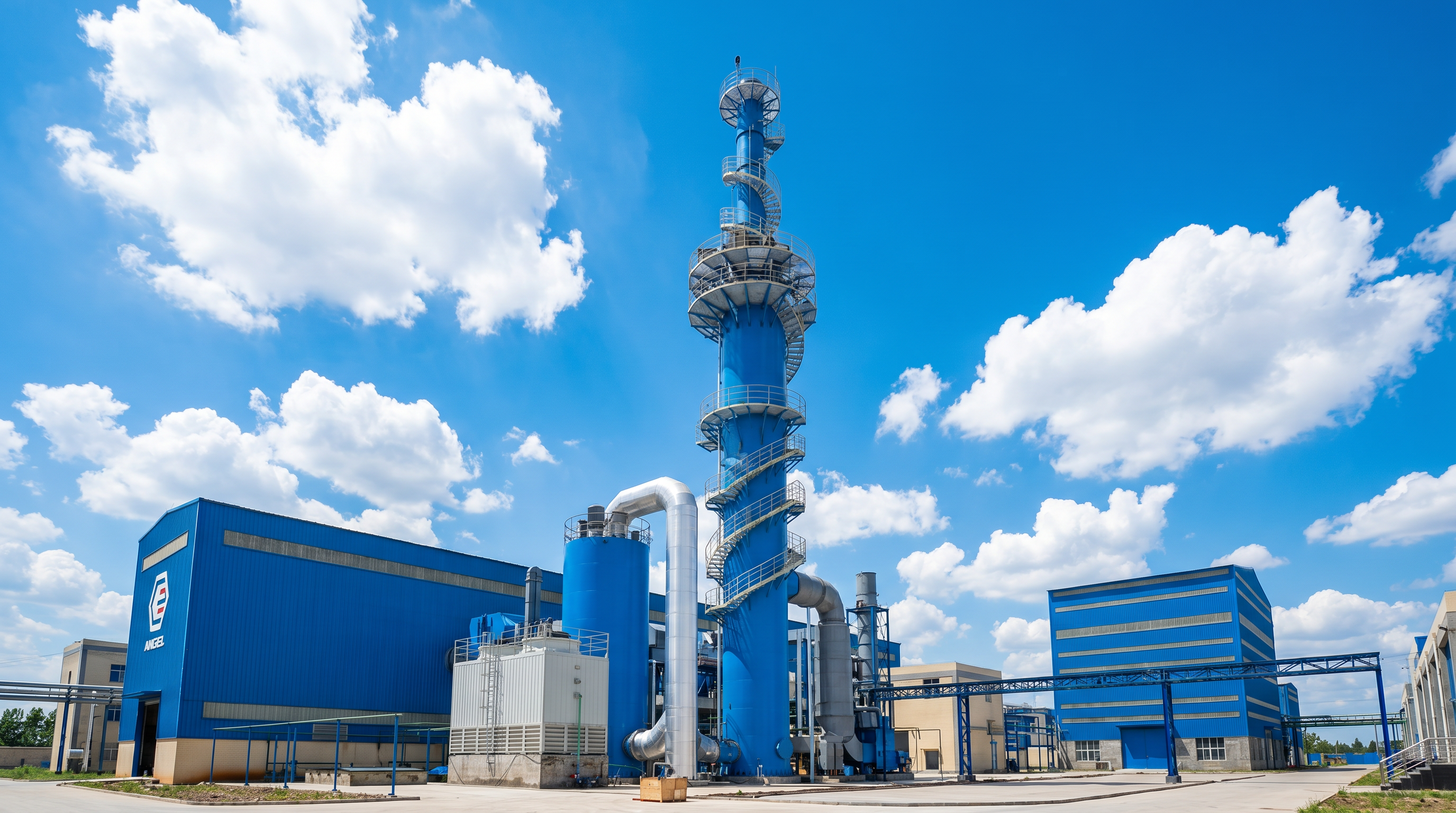
Limestone-gypsum desulfurization has been used for decades. It is a mature technology with extensive engineering experience and remains an important flue gas desulfurization solution for industrial facilities.
So why are more companies now taking a closer look at calcium-to-ammonia conversion?
The answer is not that limestone-gypsum desulfurization has suddenly stopped working.
The real change is in what companies expect from an FGD system.
Meeting SO₂ emission limits is still the basic requirement. But for a system that may operate for many years, companies are increasingly looking beyond emission compliance. By-product management, wastewater treatment, maintenance, operating costs, system reliability, and the possibility of recovering value from the treatment process are all becoming part of the decision.
This is one reason ammonia desulfurization is receiving renewed attention.
1. The Challenge Is No Longer Just SO₂ Removal
The basic principle of limestone-gypsum desulfurization is well established. Limestone is used as the absorbent to remove SO₂ from flue gas, with gypsum generated as the main by-product.
From the perspective of pollutant control, the technology is mature.
But once an FGD system enters long-term operation, the plant has to deal with more than whether the outlet SO₂ concentration meets the required limit.
What happens to the gypsum?
How should wastewater be managed?
How can scaling, deposits, blockages, and maintenance requirements be controlled over years of operation?
As environmental management becomes more detailed, these issues are becoming increasingly important to industrial operators.
Gypsum utilization and disposal are receiving more attention, while calcium-based systems may also involve the management of high-chloride wastewater under certain operating conditions.
In other words, completing an FGD project does not mean that all environmental management challenges have disappeared.
For plant operators, the longer-term questions are often more practical:
Will the system remain stable? Can operating costs be controlled? Can the by-products be effectively utilized?
2. From Pollution Treatment to Resource Recovery
This is where ammonia desulfurization and calcium-to-ammonia conversion become interesting.
Unlike limestone-gypsum desulfurization, which produces gypsum, ammonia-based FGD uses ammonia to absorb SO₂ and can generate ammonium sulfate.
This creates a different value proposition.
Traditionally, desulfurization has been viewed primarily as an environmental cost: the plant spends money to remove pollutants from flue gas.
With resource recovery in mind, however, sulfur dioxide can also become a feedstock for producing a useful by-product.
The focus therefore begins to shift from:
“How much does it cost to remove the pollutant?”
to:
“How can the plant achieve emission compliance while making better use of the material removed from the flue gas?”
Ammonium sulfate produced through ammonia desulfurization can be used as a fertilizer-related material and may also be incorporated into further product development, including combinations with organic fertilizer or humic-acid-based products.
For industrial facilities that operate an FGD system continuously for many years, this resource-utilization approach can become an important part of the overall economic assessment.
3. Does Calcium-to-Ammonia Conversion Mean Rebuilding Everything?
This is one of the most important questions for plants that already have limestone-gypsum FGD systems.
A facility may have invested heavily in its existing equipment, and the system may still be operating. If the company wants to adopt ammonia desulfurization, does it have to start from zero?
Not necessarily.
Calcium-to-ammonia conversion refers to upgrading an existing calcium-based FGD system into an ammonia-based system through process and equipment modifications.
Depending on the actual project conditions, some existing equipment can be reused, while other equipment may be newly installed or modified.
The concept is therefore different from simply building an entirely new FGD system.
For an existing industrial facility, this can provide another route:
upgrade the existing environmental asset instead of automatically replacing the entire system.
Of course, whether a particular system can be reused depends on its existing configuration, equipment condition, process requirements, and site conditions. A detailed engineering assessment is required before determining the final retrofit scope.
For plant owners, this distinction matters.
The question is not simply which technology looks more advanced on paper. The practical questions are whether the retrofit can be implemented, how much existing equipment can be retained, how the modified system will operate, and what measurable changes the upgrade can deliver.
4. The Technical Details Behind Stable Ammonia Desulfurization
Calcium-to-ammonia conversion is not simply a matter of replacing one absorbent with another.
An ammonia-based FGD system involves a number of process and equipment considerations that directly affect long-term operation.
MingSheng Environmental Protection has continued to develop its ammonia desulfurization technology through multiple generations of technical improvement.
These developments cover areas such as temperature control, pH control, concentrated circulating liquor, crystallization and separation, flue gas distribution, and automated ammonia dosing.
For example, controlling the density of the concentrated circulating liquor can help reduce scaling, deposits, and blockages.
A self-circulating flow arrangement can be used to keep the bottom of the crystallization tank mixed, reducing reliance on conventional mechanical agitators.
Layered separation technology can separate clear liquor for circulation from heavier slurry, while interlocking control systems can support automatic ammonia dosing.
These may appear to be relatively detailed engineering issues, but they ultimately determine the things plant operators care about most:
How stable is the system? How difficult is maintenance? Can operating costs be controlled?
5. Calcium-to-Ammonia Conversion Is a Recalculation of Long-Term Value
So why are companies that have used limestone-gypsum desulfurization for years increasingly considering calcium-to-ammonia conversion?
The answer is not that conventional calcium desulfurization has suddenly lost its value.
Rather, the requirements placed on an FGD system are changing.
In the past, the first question was:
Can the system remove SO₂?
Then the focus expanded to:
Can it achieve ultra-low emissions?
Today, more operators are asking additional questions:
How should the by-products be handled?
How can long-term operating costs be controlled?
What are the wastewater management requirements?
How much maintenance will the system require?
Can the existing FGD equipment be upgraded?
Can the environmental system generate additional value through resource recovery?
Calcium-to-ammonia conversion provides an upgrade pathway for existing limestone-gypsum systems.
Rather than automatically replacing an operating FGD system, the approach evaluates how existing equipment and infrastructure can be combined with process and equipment modifications to transition toward ammonia desulfurization.
At the same time, SO₂ resource recovery becomes part of the overall value chain.
6. What Should Plants Evaluate Before a Retrofit?
For companies considering a calcium-to-ammonia retrofit, the decision should be based on the actual condition of the existing system rather than on technology selection alone.
A practical evaluation can include:
Existing FGD process configuration
Condition and remaining service life of major equipment
Flue gas volume and SO₂ concentration
Existing wastewater treatment system
Gypsum production and disposal requirements
Available space for modified or new equipment
Potential for ammonium sulfate utilization
Expected operating and maintenance costs
Required emission performance
Long-term fuel and operating conditions
This type of assessment helps determine whether a retrofit is technically and economically suitable and what parts of the existing system can be retained.
For an established industrial facility, that engineering assessment is often the starting point for a realistic upgrade plan.
7. A Different Way to Think About FGD Investment
The growing interest in calcium-to-ammonia conversion reflects a broader change in how industrial companies evaluate environmental systems.
An FGD system is no longer viewed only as equipment that removes SO₂.
It is a long-term operating asset.
Its value is connected not only to emission performance, but also to maintenance, wastewater management, by-product treatment, resource recovery, energy consumption, and the ability to adapt to future requirements.
This is the direction behind MingSheng Environmental Protection's continued development of calcium-to-ammonia conversion and SO₂ resource recovery technology.
For plants that have operated limestone-gypsum FGD systems for many years, the question is not necessarily whether the existing technology was right or wrong.
The more practical question is whether the existing system can be upgraded to create greater long-term value.
That is why calcium-to-ammonia conversion is attracting increasing attention: it offers a potential pathway for existing FGD assets to move from simply treating pollutants toward more integrated emission control and resource utilization.
Table of Contents
- 1. The Challenge Is No Longer Just SO₂ Removal
- 2. From Pollution Treatment to Resource Recovery
- 3. Does Calcium-to-Ammonia Conversion Mean Rebuilding Everything?
- 4. The Technical Details Behind Stable Ammonia Desulfurization
- 5. Calcium-to-Ammonia Conversion Is a Recalculation of Long-Term Value
- 6. What Should Plants Evaluate Before a Retrofit?
- 7. A Different Way to Think About FGD Investment