 EN
EN


In today’s global transition from industrial civilization to ecological civilization, industries are facing unprecedented pressure and opportunity at the same time. Environmental protection is no longer a passive compliance requirement, but a key driver of industrial transformation, technological upgrading, and sustainable competitiveness.
With the concept of “new quality productive forces” integrated into national development strategies and the global “dual carbon” goals accelerating industrial restructuring, ultra-low emission standards have become a mandatory requirement rather than an optional target. In this context, environmental technologies are evolving from end-of-pipe treatment to system-level optimization, and from cost burden to value creation.
However, true green transformation is never achieved by policy alone. It requires a deeper driving force—an enduring commitment to precision, responsibility, and continuous improvement. This is where the concept of craftsmanship spirit becomes increasingly relevant in the modern environmental industry.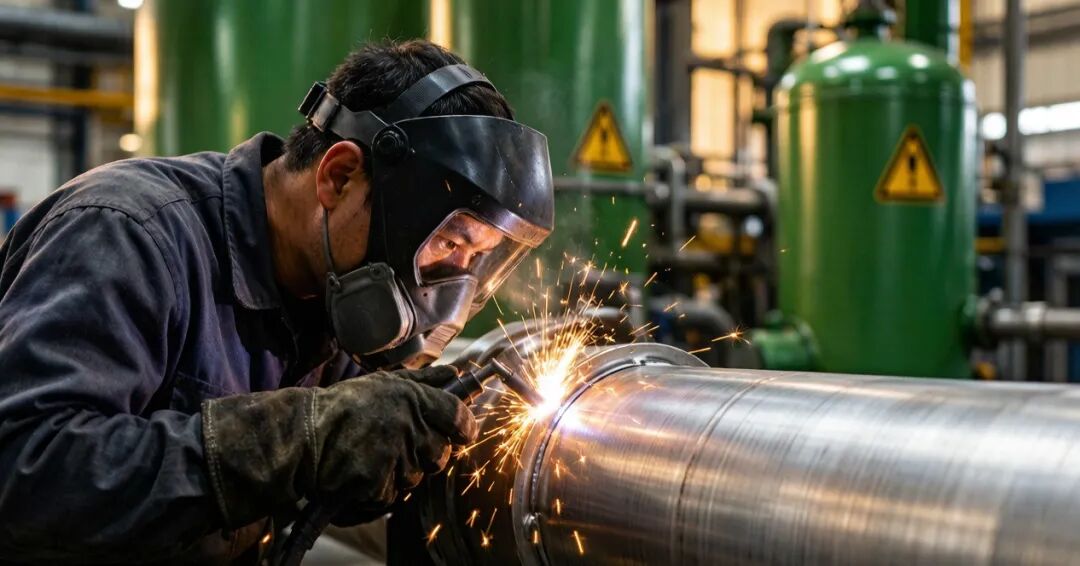
Traditionally, craftsmanship spirit is associated with dedication, patience, and pursuit of perfection in manual work. But in today’s environmental engineering sector, its meaning has expanded significantly.
It is no longer only about perfecting a product. It is about designing integrated systems that redefine how pollution is treated and how resources are recovered.
In modern environmental engineering, craftsmanship spirit means:
True craftsmanship in this field is not only technical—it is also philosophical. It asks deeper questions:
Can pollution be transformed into resources?
Can environmental treatment generate economic value?
Can sustainability become a growth engine instead of a cost center?
These questions define the evolution of modern environmental engineering.
The traditional environmental protection model has long been based on “treatment cost”—industries invest capital to reduce pollution, while by-products are often treated as waste or secondary burdens.
However, advanced environmental engineering technologies are changing this paradigm.
By converting sulfur dioxide into ammonium sulfate and other valuable by-products, modern systems enable a circular approach where emissions are no longer waste, but resources.
This shift represents a fundamental transformation:
From cost-driven compliance
To value-driven sustainability
From linear treatment systems
To circular industrial ecosystems
This is where craftsmanship spirit becomes essential. It is not only about building equipment—it is about redesigning industrial logic.
In environmental engineering, even the smallest deviation can affect system performance, stability, and long-term reliability.
That is why precision is not optional—it is fundamental.
Engineering teams working in this field often follow strict internal standards for:
Behind every operational system is a long chain of engineering decisions where quality must be controlled at every step.
In this sense, craftsmanship is not abstract—it is measurable in every detail of execution.
Modern environmental challenges are becoming increasingly complex. Beyond sulfur dioxide control, industries must now address:
This requires continuous innovation in process design and system integration.
Advanced technologies such as ammonia-based desulfurization and integrated purification systems are examples of how engineering innovation is reshaping traditional environmental solutions.
By improving reaction efficiency, reducing waste streams, and enabling by-product recovery, these systems reflect the evolution of environmental engineering from single-function treatment to multi-dimensional optimization.
Across different industrial sectors, environmental engineering must be adapted to real operating conditions.
Typical applications include:
Each industry presents different flue gas characteristics, space limitations, and operational challenges.
Successful engineering is therefore not about standardized solutions, but customized system design based on real-world conditions.
Over years of engineering practice, projects across multiple industries have demonstrated that environmental performance and economic performance are not contradictory. When systems are properly designed, both can be achieved simultaneously.
At the heart of every environmental project is the engineering team responsible for turning design concepts into operational reality.
From initial design to fabrication, installation, and commissioning, every stage requires coordination, discipline, and accountability.
Craftsmanship spirit is reflected in:
It is this collective effort that ensures environmental systems operate reliably under complex industrial conditions.
As industries continue to evolve, environmental engineering will play an increasingly central role in shaping sustainable development.
Future environmental systems will not only focus on emission reduction but also on:
This transformation requires both technological advancement and a long-term commitment to engineering excellence.
Craftsmanship spirit provides the foundation for this transition. It ensures that innovation is not superficial, but deeply embedded in engineering practice.
In the era of green development, environmental engineering is no longer just about compliance. It is about redefining the relationship between industry and nature.
Craftsmanship spirit represents the discipline, precision, and responsibility required to achieve this transformation. It connects technology with purpose, and engineering with long-term sustainability.
Through continuous innovation and commitment to quality, the environmental industry is moving toward a future where pollution control becomes resource creation, and sustainability becomes a core driver of industrial value.
This is not only an engineering evolution, but also a new industrial philosophy—one built on precision, responsibility, and long-term vision.
Desulfurization & Denitrification
De-dusting
VOCs Treatment
Guillotine Isolation Damper
Decarbonization
Humic Acid Co-production
Waste Tire Pyrolysis
Operation & Maintenance
3Rd. Longshan Environmental Technology Park, Zhangqiu District, JiNan, Shandong, China
Copyright © 2025 MirShine Environmental Protection Technology Co., Ltd. All rights reserved. Privacy Policy