 EN
EN


Against the backdrop of the deepening “dual-carbon” strategy and increasingly stringent ultra-low emission requirements for industrial flue gas, the coordinated control of sulfur dioxide (SO₂) and carbon dioxide (CO₂) has become a critical challenge for green transformation in key industries such as petrochemicals, power generation, and coking.
As 2026 marks the opening year of China’s 15th Five-Year Plan, the Ministry of Ecology and Environment has clearly emphasized continuous PM2.5 reduction targets and the implementation of the Action Plan for Continuous Air Quality Improvement (2026–2030), while accelerating ultra-low emission retrofits in key industries. Meanwhile, the Guiding Opinions on the Development of Zero-Carbon Factories, jointly issued by five ministries, propose expanding zero-carbon factory initiatives to sectors such as petrochemicals and building materials by 2030, exploring new decarbonization pathways for energy-intensive industries.
In addition, the newly released Environmental Code of the People’s Republic of China explicitly requires enterprises in industries such as chemicals to adopt cleaner production processes and install desulfurization and denitrification systems. The government strongly encourages the adoption of ultra-low emission technologies. Together, policy guidance and legal enforcement are driving a transition from end-of-pipe treatment to systematic emission reduction.
However, conventional flue gas treatment technologies typically follow a fragmented approach, with desulfurization and decarbonization systems built and operated independently. This results in large footprints, high capital investment, elevated operating costs, and limited resource recovery potential, along with persistent challenges such as ammonia slip. Such limitations make it difficult to meet both environmental compliance and economic efficiency requirements under the new regulatory landscape.
In response to these challenges, MirShine Environmental, leveraging over 20 years of technical expertise and a portfolio of more than 100 patents, has independently developed an ammonia-based integrated desulfurization and decarbonization technology. This innovative solution provides a highly efficient and resource-oriented pathway for industrial flue gas treatment.
Using ammonia as the core medium, MirShine has established a closed-loop process integrating desulfurization, decarbonization, and resource recovery, achieving both emission reduction and value creation.
Desulfurization Process:
SO₂ reacts with ammonia to produce high-purity ammonium sulfate, which can be directly utilized as a premium nitrogen fertilizer.
Decarbonization Process:
Under specific process conditions, ammonia reacts with CO₂ to produce valuable industrial products such as urea, effectively converting waste into resources.
This technology achieves:
Desulfurization efficiency above 99%
SO₂ emission concentration below 10 mg/Nm³
Decarbonization efficiency exceeding 85%
Ammonia slip controlled within 2 mg/Nm³
All performance indicators significantly surpass national ultra-low emission standards, effectively eliminating visible plume (“white smoke”) and associated environmental concerns.
MirShine’s ammonia-based technology is built around four core principles: high efficiency, operational stability, energy saving, and intelligent control. From process design to system automation, the technology is comprehensively optimized:
Dual-Parameter Precision Control:
Real-time adjustment of temperature and pH ensures adaptability across diverse operating conditions, reducing operating costs by over 30% compared to conventional technologies.
Concentrated Circulating Liquid Process:
Prevents scaling and blockage inside the absorption tower while optimizing crystallization conditions for effective resource recovery.
Self-Circulation Mixing Technology:
Eliminates the need for mechanical agitators, reducing maintenance risks and preventing system failures.
Optimized Gas Flow Distribution:
Ensures uniform flue gas distribution, significantly enhancing desulfurization efficiency.
Multi-Stage Separation and Cascade Utilization:
Enables refined management of circulating liquid and production of high-quality ammonium sulfate by-products.
Full-Process Intelligent Interlock Control:
Automated operation reduces labor requirements by over 60%, aligning with the trend toward digitalized and intelligent industrial systems.
These innovations not only enhance system reliability and adaptability but also align closely with the requirements of zero-carbon factory development, particularly in improving digitalization and intelligent carbon management.
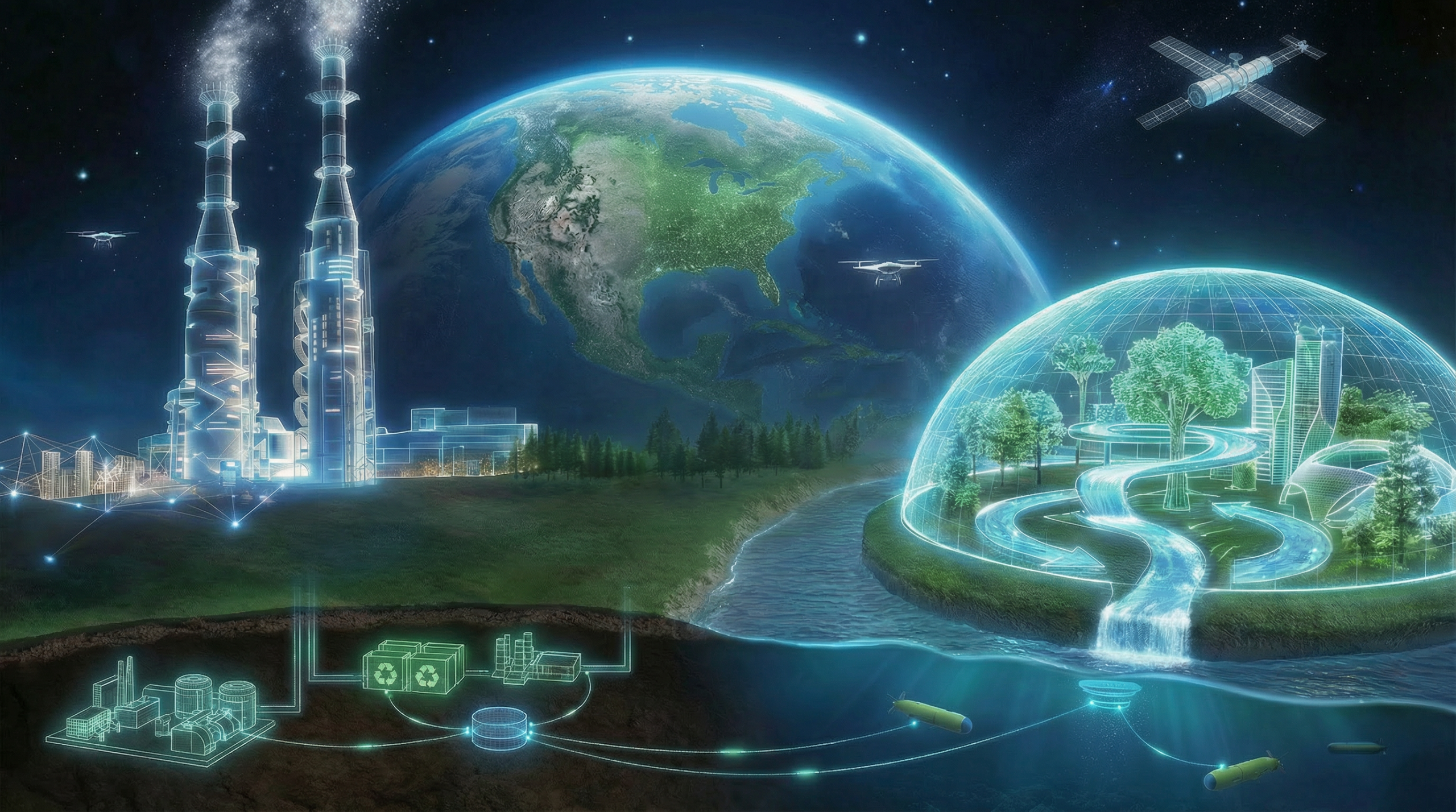
For industrial enterprises, environmental protection should not only be a compliance requirement but also a driver of sustainable growth. The implementation of the Environmental Code clearly stipulates penalties ranging from RMB 100,000 to RMB 1,000,000—or even shutdown—for enterprises that fail to install required emission control systems.
The key value of MirShine’s integrated ammonia-based technology lies in its ability to transform pollutants into marketable, high-value products:
By-product revenue can offset up to 80% of absorbent costs
A single system simultaneously treats multiple pollutants
Land footprint reduced by over 50%
This enables enterprises not only to meet ultra-low emission standards and avoid regulatory risks but also to convert environmental investment into tangible economic returns, significantly enhancing green competitiveness.
The reliability and economic viability of this technology have been validated across multiple industrial projects, where it has successfully enabled ultra-low emissions while improving resource utilization efficiency.
Looking ahead, the increasing complexity of industrial flue gas treatment demands solutions that are not only efficient and stable but also economically sustainable. MirShine Environmental continues to advance ammonia-based technologies, delivering integrated solutions that address evolving environmental challenges.
By driving technological innovation and practical implementation, MirShine is committed to helping industries achieve ultra-low emissions and green transformation during the 15th Five-Year Plan period, providing a practical and scalable pathway toward achieving global carbon reduction goals.
Desulfurization & Denitrification
De-dusting
VOCs Treatment
Guillotine Isolation Damper
Decarbonization
Humic Acid Co-production
Waste Tire Pyrolysis
Operation & Maintenance
3Rd. Longshan Environmental Technology Park, Zhangqiu District, JiNan, Shandong, China
Copyright © 2025 MirShine Environmental Protection Technology Co., Ltd. All rights reserved. Privacy Policy