 EN
EN


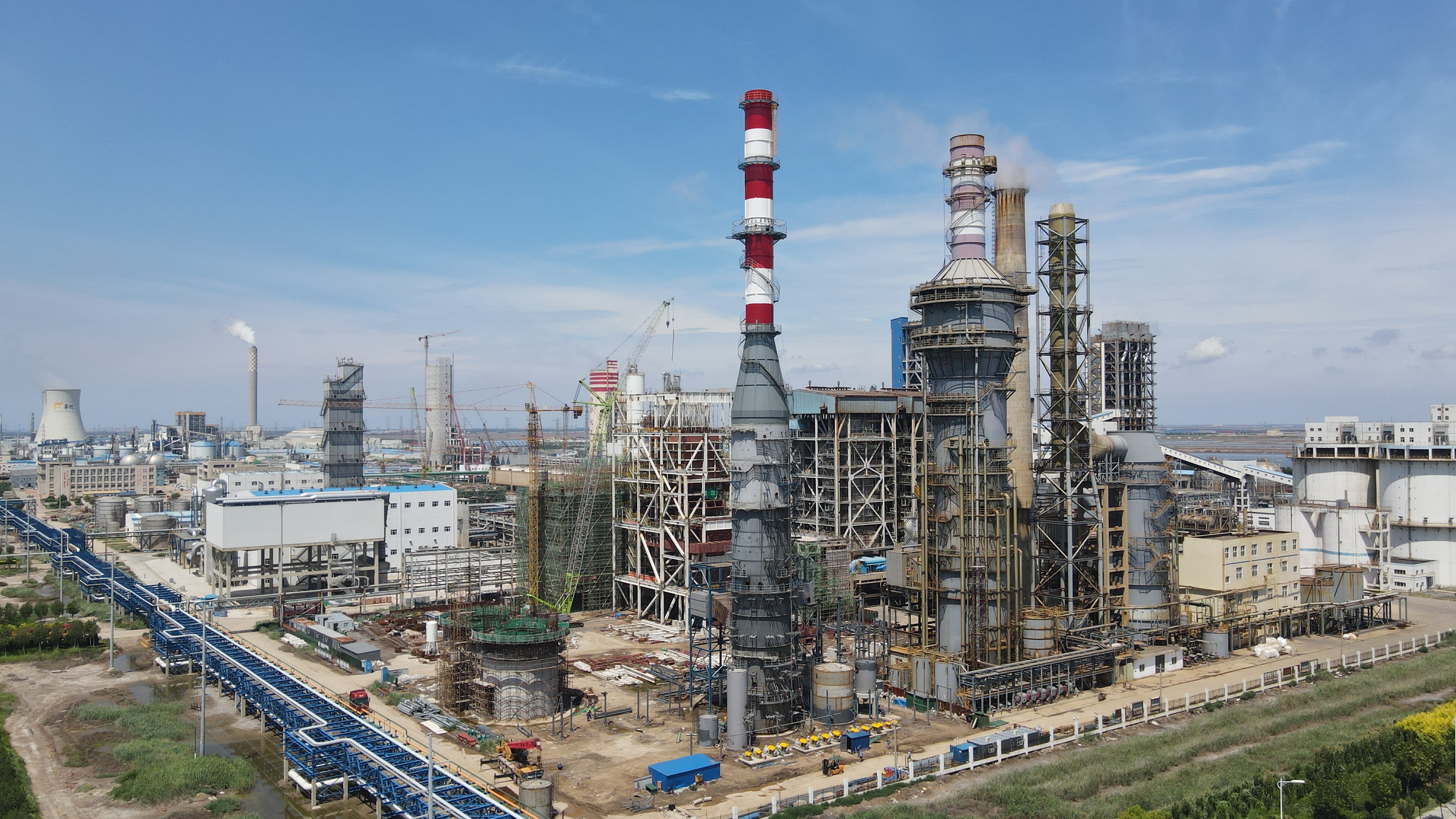
Focus Keywords: ammonia desulfurization, ammonia FGD, industrial flue gas desulfurization, SO₂ removal system, ammonium sulfate recovery
Meta Description: Explore ammonia desulfurization technology for industrial flue gas, including SO₂ removal, ammonium sulfate recovery, process advantages, and applications in power, steel, chemical, and metallurgical industries.
Industrial SO₂ Control Is Changing
For many years, industrial desulfurization was viewed mainly as an end-of-pipe environmental protection process.
The objective was simple: remove sulfur dioxide from flue gas before it reached the stack.
That objective remains important, but many industrial companies are now looking at the entire material balance of the process. If a pollutant can be converted into a useful product, the environmental system may provide additional economic value.
This is where ammonia desulfurization becomes particularly interesting.
Instead of using limestone as the main absorbent, ammonia is used to capture sulfur dioxide. The absorbed sulfur can then be converted into ammonium sulfate.
For suitable industrial facilities, the process can therefore combine SO₂ emission control with sulfur and nitrogen recovery.
MirShine Environmental Group provides ammonia-based desulfurization solutions designed around the actual process conditions of industrial customers.
The Basic Principle of Ammonia Desulfurization
Ammonia has a strong ability to react with acidic sulfur compounds.
When sulfur dioxide enters the absorber, it comes into contact with an ammonia-containing liquid.
The SO₂ is absorbed into the liquid phase and reacts with ammonia, forming ammonium sulfite and ammonium bisulfite.
These compounds can subsequently be oxidized to ammonium sulfate.
The simplified process can be understood as:
SO₂ → absorption → ammonium sulfite/bisulfite → oxidation → ammonium sulfate
The process can be adjusted according to the desired product form and plant conditions.
Why Ammonia Is an Interesting Desulfurization Reagent
The choice of reagent has a direct effect on both the process and the economics of an FGD system.
Limestone is inexpensive and widely available, which is one reason limestone-gypsum FGD has become common in large-scale applications.
Ammonia has a different advantage.
It can participate directly in the formation of ammonium sulfate, a commercially useful material.
This means the sulfur removed from the flue gas does not necessarily need to be treated only as waste.
For plants where ammonia is readily available and ammonium sulfate has value, this can change the economics of the desulfurization process.
Applications in the Steel Industry
Steel production contains several processes where sulfur dioxide emissions can become an environmental concern.
Depending on the production route and fuel or raw material characteristics, SO₂ can be generated by sintering, heating, and other combustion-related operations.
An ammonia-based desulfurization system can be evaluated for these applications when the gas conditions are compatible with the process.
One advantage is that the system can potentially be integrated with other environmental technologies.
For example, a steel plant may require:
Desulfurization
Denitrification
Dust removal
Gas cooling
Waste heat recovery
A coordinated design can help avoid treating each pollution control system as a completely independent installation.
Applications in Chemical and Petrochemical Facilities
Chemical and petrochemical plants can have relatively complex gas streams.
Some facilities already have ammonia-related infrastructure, which may simplify the integration of an ammonia-based FGD system.
However, the presence of other gases and contaminants must be evaluated carefully.
Before selecting an ammonia desulfurization process, engineers should review:
SO₂ concentration
Flue gas flow
Temperature
Moisture
Dust
Chlorides
Other acidic components
The objective is to design the absorption and downstream treatment process around the actual gas rather than assuming a standard composition.
Applications in Power Generation
Power generation remains one of the largest industrial applications for flue gas desulfurization.
Where sulfur-containing fuels are used, SO₂ removal is an essential part of the emission control system.
Ammonia FGD can be considered when the plant has:
A reliable ammonia supply
Suitable flue gas conditions
Demand for ammonium sulfate
Appropriate product handling infrastructure
Economic evaluation is especially important because ammonia prices and fertilizer values can change over time.
Resource Recovery Changes the Way FGD Is Evaluated
A conventional environmental project is often evaluated through capital investment and operating cost.
For ammonia desulfurization, the calculation can be broader.
The project may involve:
Ammonia consumption + energy consumption + maintenance cost
but potentially also:
Ammonium sulfate production value
This does not mean every ammonia FGD project will automatically be more economical than limestone FGD.
The final result depends on local conditions.
For example, ammonia cost may be high in one location while ammonium sulfate has strong local demand. In another location, limestone may be inexpensive and gypsum may already have an established market.
Therefore, a site-specific feasibility study is essential.
Process Control Is Critical
Stable operation requires more than simply adding ammonia to flue gas.
The absorption process needs to maintain appropriate operating conditions.
Important parameters include:
Liquid-to-gas ratio
Ammonia concentration
pH
Oxidation conditions
Gas temperature
Gas flow rate
If these parameters are not properly controlled, reagent utilization can decrease and product quality may become unstable.
This is particularly important when ammonium sulfate is intended for commercial use.
Ammonia Slip and Process Optimization
One of the issues that must be carefully controlled in ammonia-based processes is excess ammonia.
If ammonia is supplied far above the required reaction amount, the system may experience increased ammonia consumption and potentially higher ammonia slip.
Good process design aims to achieve sufficient SO₂ removal without unnecessarily overfeeding ammonia.
This requires reliable measurement, appropriate control logic, and good gas-liquid contact.
Integrated Flue Gas Treatment
Modern industrial facilities rarely have only one pollutant to control.
A typical plant may need to address:
NOx
SO₂
Dust
VOCs
Acid gases
MirShine's environmental technology portfolio includes desulfurization, denitrification, dust removal, VOC treatment, and related systems.
This allows different processes to be considered together when a project requires comprehensive flue gas treatment.
For example, an industrial facility may combine ammonia-based FGD with SCR denitrification.
The final configuration depends on the process sequence and actual flue gas conditions.
Why Work With an Experienced FGD Engineering Company?
The absorber itself is only one part of a desulfurization system.
The complete system may involve:
Absorption equipment
Circulation pumps
Ammonia supply
Oxidation
Product recovery
Instrumentation
Control system
Ductwork
Supporting equipment
A supplier with broader engineering experience can evaluate the relationship between these systems.
MirShine provides engineering design and equipment solutions for industrial flue gas treatment, with a focus on customized systems rather than a one-size-fits-all package.
Conclusion
Ammonia desulfurization provides an alternative approach to industrial SO₂ control.
Its key feature is the possibility of recovering sulfur in the form of ammonium sulfate rather than generating only a waste stream.
For plants with suitable ammonia supply, appropriate gas conditions, and a market for ammonium sulfate, the technology can provide an interesting combination of environmental protection and resource recovery.
MirShine Environmental Group develops customized ammonia-based FGD solutions for industrial customers and can integrate desulfurization with other flue gas treatment technologies when required.
Frequently Asked Questions
How does ammonia remove SO₂?
Ammonia reacts with absorbed sulfur dioxide to form ammonium sulfite and ammonium bisulfite. These compounds can then be oxidized to ammonium sulfate.
What is the advantage of ammonia desulfurization?
The main advantage is that the sulfur removed from flue gas can potentially be recovered as ammonium sulfate rather than being handled only as waste.
Is ammonia FGD suitable for steel plants?
It can be suitable for certain steel production processes, depending on SO₂ concentration, gas flow, temperature, dust, and other gas characteristics.
What is ammonium sulfate used for?
Ammonium sulfate is commonly used as a nitrogen- and sulfur-containing fertilizer when the product meets applicable quality requirements.
Is ammonia FGD better than limestone FGD?
Neither technology is universally better. The appropriate option depends on reagent prices, product value, gas conditions, plant infrastructure, and environmental requirements.
Can ammonia FGD and SCR be combined?
Yes. Ammonia-based FGD and SCR denitrification can be integrated into a comprehensive industrial flue gas treatment system.
What information is required for an ammonia FGD proposal?
Typical information includes gas flow, SO₂ concentration, gas temperature, dust concentration, moisture, required outlet emission level, operating hours, and available plant layout.
Does MirShine manufacture FGD equipment?
MirShine provides environmental engineering and equipment solutions for industrial flue gas treatment, including customized desulfurization systems.
Table of Contents
- Industrial SO₂ Control Is Changing
- The Basic Principle of Ammonia Desulfurization
- Why Ammonia Is an Interesting Desulfurization Reagent
- Applications in the Steel Industry
- Applications in Chemical and Petrochemical Facilities
- Applications in Power Generation
- Resource Recovery Changes the Way FGD Is Evaluated
- Process Control Is Critical
- Ammonia Slip and Process Optimization
- Integrated Flue Gas Treatment
- Why Work With an Experienced FGD Engineering Company?
- Conclusion
-
Frequently Asked Questions
- How does ammonia remove SO₂?
- What is the advantage of ammonia desulfurization?
- Is ammonia FGD suitable for steel plants?
- What is ammonium sulfate used for?
- Is ammonia FGD better than limestone FGD?
- Can ammonia FGD and SCR be combined?
- What information is required for an ammonia FGD proposal?
- Does MirShine manufacture FGD equipment?