 EN
EN


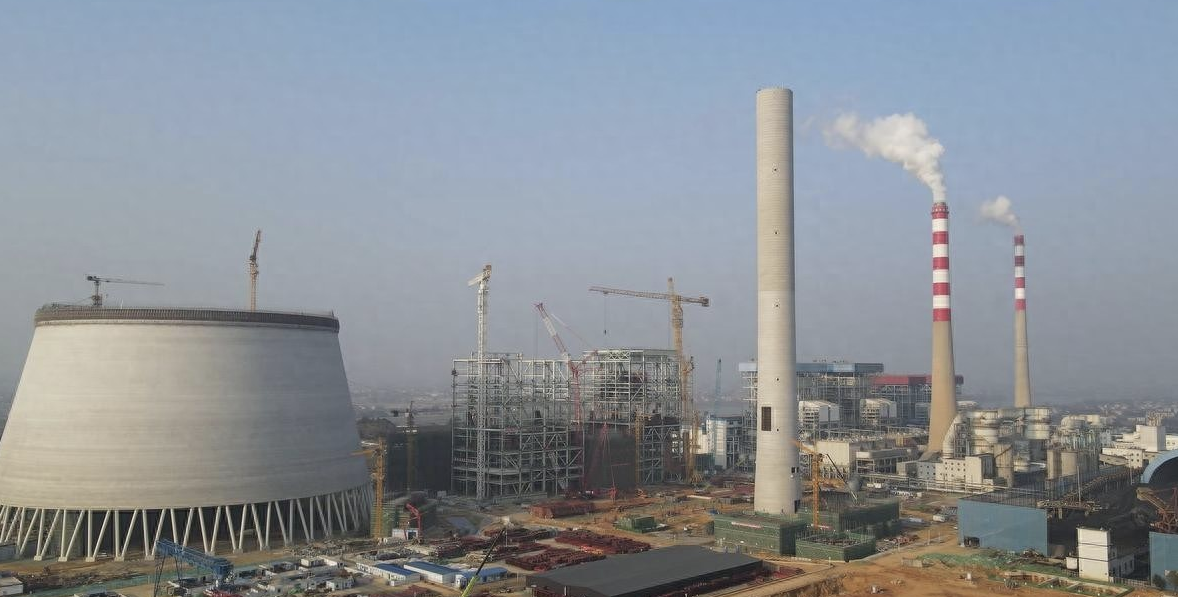
For newly built coal-fired power plants, multiple flue gas desulfurization (FGD) and denitrification (DeNOx) technologies are available. Each option differs in reaction principles, efficiency, investment scale, operational stability, and by-product utilization. Choosing the right combination is essential for achieving ultra-low emissions while maintaining reasonable operating costs.
Below is an overview of the most widely used technologies, along with practical industry applications.
Desulfurization Technologies
1. Limestone–Gypsum Wet Desulfurization (WFGD)
The limestone–gypsum process is currently the most widely adopted wet FGD technology globally. Finely ground limestone is mixed with water to form a slurry, which is sprayed into an absorber tower. The SO₂ in flue gas reacts with the slurry to form calcium sulfite, which is later oxidized into gypsum crystals.
Key features:
Desulfurization efficiency above 95%
Mature, reliable, and suitable for large power units
Gypsum by-product can be reused in construction materials
High system complexity, with higher CAPEX and OPEX compared to dry alternatives
A representative case is the desulfurization and denitrification project completed by MirShine Environmental for the Shaanxi Coal Group’s Chang’an–Yiyang Power Plant. With a total installed capacity of 3.86 GW, it is the largest coal-fired power plant in Hunan Province.
2. Ammonia-Based Desulfurization
The ammonia method uses aqueous ammonia as the absorbent. SO₂ reacts with ammonia to form ammonium sulfite and ammonium bisulfite, which are further oxidized and processed to produce ammonium sulfate fertilizer.
Advantages:
Desulfurization efficiency reaches 95–99%
Fast reaction kinetics
By-product ammonium sulfate has high economic value
Zero secondary wastewater and solid waste
Challenges:
Higher sensitivity to equipment corrosion
Higher operational costs
Requires stable ammonia supply and downstream fertilizer consumption channels
MirShine Environmental has developed an advanced staged separation ammonia-based FGD process, solving long-standing industry issues such as aerosol formation and ammonia slip. This technology integrates desulfurization and dust removal while significantly reducing energy consumption. It has been applied across multiple sectors, delivering notable environmental and economic benefits.
Denitrification Technologies
1. Selective Catalytic Reduction (SCR)
SCR is the most mature and effective DeNOx technology for utility boilers. Ammonia is injected into flue gas at 280–420°C in the presence of a catalyst, converting NOₓ into nitrogen and water.
Highlights:
NOₓ removal efficiency of 80–90%
Proven performance in large-scale power plants
Stable long-term operation
Considerations:
Catalyst cost is high
Catalyst poisoning and deactivation must be managed
Higher maintenance requirements
SCR is typically the standard choice for plants aiming for ultra-low NOₓ emissions.
2. Selective Non-Catalytic Reduction (SNCR)
SNCR injects ammonia or urea directly into the boiler’s 850–1100°C temperature zone. The reagent breaks down into NH₃, which reacts with NOₓ.
Advantages:
Simple configuration and low investment cost
No catalyst required
Limitations:
Lower removal efficiency (30–60%)
Strict temperature window
Higher ammonia slip
More suitable for smaller units or regions with moderate emission requirements
3. Hybrid SNCR + SCR Process
In this combined approach, SNCR removes a portion of NOₓ in the furnace. The remaining NOₓ is treated in a downstream SCR reactor. The ammonia slip from SNCR can also be utilized by the SCR unit.
Benefits:
High overall DeNOx efficiency
Reduced catalyst volume and lower SCR investment
Well suited for plants aiming for compliance with NOₓ standards at optimized cost
Industry Innovation: MirShine Environmental’s Advanced Ammonia-Based FGD
MirShine Environmental has iterated its ammonia-based desulfurization technology through seven generations of upgrades. Key achievements include:
Near-zero ammonia slip
Complete suppression of aerosol formation
Integrated ammonia-based desulfurization and dust removal
Co-production of ammonium sulfate organic compound fertilizers
The solution not only enables ultra-low emissions but also provides additional revenue streams for plant operators. Many enterprises that adopted this technology have achieved both environmental compliance and unexpected economic gains.
Conclusion
Power plants today have a wide range of FGD and DeNOx technologies to choose from, each offering different strengths depending on unit size, coal quality, emission requirements, and cost constraints. Wet limestone–gypsum FGD remains the dominant desulfurization method, while ammonia-based technology is gaining traction for its high efficiency and valuable by-products. On the denitrification side, SCR continues to be the standard for high-performance applications.
With continuous innovation—such as the breakthrough ammonia-based FGD developed by Shandong Mingsheng Environmental—power plants can achieve ultra-low emissions while improving long-term economic performance.