 EN
EN


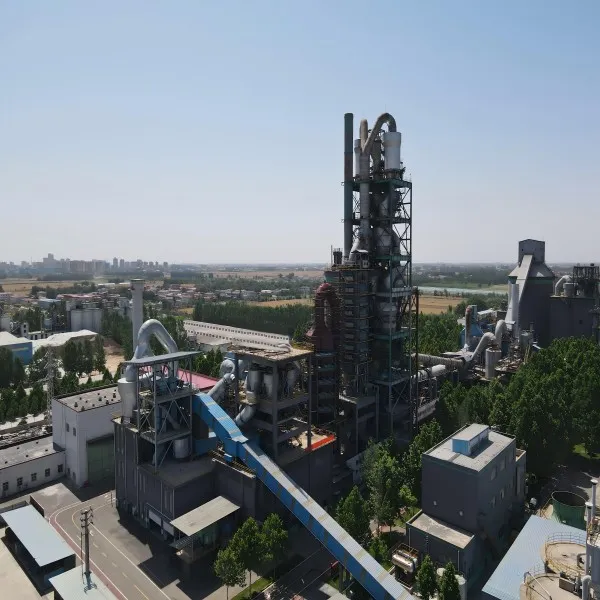
Air-quality regulations around the world have become increasingly strict over the past decade, pushing power plants, steelworks, cement producers, and chemical enterprises to upgrade their flue-gas cleaning systems. At the center of these environmental requirements is flue gas desulfurization (FGD)—the essential process for removing sulfur dioxide (SO₂) from industrial exhaust streams.
As industries transition toward greener and more efficient operations, FGD technologies continue to evolve. From the well-established limestone-gypsum method to newer ammonia-based approaches, each solution offers different advantages in efficiency, cost, operating stability, and by-product recovery.
This article provides a comprehensive overview of desulfurization technologies, core mechanisms, application scenarios, and global industry trends—designed for engineers, procurement managers, EPC contractors, and environmental professionals seeking reliable, up-to-date insights.
1. Why Desulfurization Matters
Sulfur dioxide is a major pollutant generated by the combustion of fossil fuels, metallurgical reactions, and heavy industrial processes. Without proper treatment, SO₂ emissions contribute to:
Acid rain
Smog formation
Severe respiratory health problems
Soil acidification
Damage to equipment, buildings, and crops
Regulations in Europe, the Middle East, Southeast Asia, and China now commonly require SO₂ emissions to reach as low as 35 mg/Nm³, making FGD systems mandatory for many plants.
Industrial clients are also facing growing pressure from international buyers, ESG investors, and carbon-neutral commitments, all of which make emission control a strategic priority—not just a compliance obligation.
2. Core Technologies Used in Flue Gas Desulfurization
FGD methods can be broadly categorized into wet, semi-dry, and dry processes. Each has its own chemical principles, operating conditions, and suitable industries.
2.1 Limestone–Gypsum Wet Desulfurization (WFGD)
This is the most widely applied desulfurization method in coal-fired power plants and large industrial boilers.
Process principle:
SO₂ in the flue gas reacts with limestone slurry (CaCO₃) to form calcium sulfite, which is further oxidized to gypsum (CaSO₄·2H₂O).
Key advantages:
High and stable SO₂ removal efficiency (95–99%)
Mature, reliable technology
Applicable to large-scale plants
Gypsum by-product can be sold for building materials
Limitations:
High water consumption
Larger footprint
High initial investment
Scaling and slurry pipeline maintenance requirements
Despite the drawbacks, limestone-gypsum remains the global mainstream for power plants and large combustion systems due to its stability and proven track record.
2.2 Ammonia-Based Desulfurization (NH₃-FGD)
In recent years, ammonia desulfurization has gained strong momentum, especially in chemical plants, steelworks, ferrosilicon smelting, coking plants, and industrial boilers.
Process principle:
SO₂ reacts with ammonia to form ammonium sulfite/bisulfite, which is then oxidized to produce ammonium sulfate fertilizer.
Advantages:
SO₂ removal efficiency 97%
NO₂ absorption ability—simultaneous desulfurization & partial denitrification
Zero wastewater discharge
Valuable by-product ammonium sulfate
No scaling, simpler operation than limestone gypsum
Challenges:
Requires stable ammonia supply
Ammonia slip control
Higher safety and ventilation requirements
For industries seeking both emission reduction and resource efficiency, ammonia-based desulfurization is increasingly becoming a preferred choice.
2.3 Semi-Dry Desulfurization (SDA) / Spray Dryer Absorber
Semi-dry systems are common in cement plants, waste-to-energy facilities, small power units, and biomass boilers.
Features:
Uses hydrated lime
Requires minimal water
Medium SO₂ removal efficiency (70–90%)
Low investment cost
Simple operation and low maintenance
Although semi-dry systems cannot reach the ultra-low emission levels required in some countries, they remain a cost-effective solution for smaller or older facilities.
2.4 Dry Desulfurization
Dry processes involve injecting dry sorbents directly into the flue gas. They are typically used for:
Small industrial furnaces
Glass kilns
Low-SO₂ exhaust streams
Retrofit projects with limited space
Dry systems are compact and easy to maintain, but their efficiency and reaction completeness are lower than wet systems.
3. How to Choose the Right Desulfurization Technology
Selecting an appropriate FGD system involves evaluating several factors:
3.1 SO₂ Concentration and Flue Gas Flow Rate
High SO₂ + large flow → prefer wet systems (limestone or ammonia)
Medium SO₂ → semi-dry
Low SO₂ → dry absorption
3.2 Water Resources and Local Regulations
Water-scarce regions (Middle East) may prefer semi-dry
For the strictest standards, ammonia or limestone-gypsum are required
3.3 By-Product Utilization
If a plant has fertilizer buyers, ammonia desulfurization becomes more economical
Gypsum markets vary internationally
3.4 CAPEX & OPEX Considerations
Total cost includes electricity, sorbents, maintenance, manpower, consumables, and gypsum or ammonium sulfate handling. Many clients now prioritize long-term operating cost over initial investment.
4. Key Components of an Efficient FGD System
Modern desulfurization units include:
Absorber tower or scrubber
Slurry preparation system
Oxidation air equipment
Mist eliminators
Circulation pumps
By-product handling systems (gypsum, ammonium sulfate)
Drying and packaging systems (for ammonia-based solutions)
Automation and online monitoring
High reliability of the absorber, pumps, and mist eliminators directly determines the SO₂ removal performance.
5. Global Trends in Desulfurization Technology
5.1 Shift to Resource-Recovery FGD
Governments and clients increasingly demand circular-economy solutions. Ammonia-based systems align well with this trend, producing fertilizer-grade ammonium sulfate rather than waste gypsum.
5.2 More Hybrid and Integrated Systems
FGD is now often combined with:
SCR/SNCR denitrification
Dust removal
Broadband pollution control
VOCs treatment
Modern systems are optimized to achieve ultra-low emissions in a single integrated process.
5.3 Digitalization and Smart Control
AI-driven monitoring, optimized pH/ammonia feed rate, and automated scaling prediction are becoming standard in advanced plants.
5.4 Expansion in Emerging Markets
Countries in the Middle East, Southeast Asia, Africa, and South America are rapidly upgrading environmental standards. Demand growth is especially strong in:
Saudi Arabia
UAE
Indonesia
Vietnam
India
Kazakhstan
For EPC contractors and equipment suppliers, these regions represent major market opportunities.
6. Case Applications: Where FGD Makes the Biggest Impact
6.1 Coal-Fired Power Plants
Still the largest installation base worldwide, typically using limestone-gypsum or ammonia systems to achieve ultra-low emission compliance.
6.2 Ferrosilicon & Metallurgical Plants
Flue gas often contains high SO₂ and particulates. Ammonia desulfurization paired with dust removal is highly effective.
6.3 Coking & Coal Chemical Industry
Ammonia-rich environments and variable SO₂ loads make ammonia-FGD particularly suitable.
6.4 Cement & Waste-to-Energy Plants
Semi-dry and dry systems dominate due to restricted space and lower water availability.
7. Future Outlook: Toward Zero-Emission Combustion
As the industrial world moves toward carbon neutrality, desulfurization technology will continue to evolve toward:
Zero wastewater
Lower energy consumption
Higher by-product value
Full-process digital control
Integration with CO₂ capture
FGD remains one of the most essential environmental technologies for heavy industry, and its role will only grow as air-quality standards tighten globally.
Conclusion
Flue gas desulfurization is no longer just an environmental requirement—it’s a long-term investment in sustainable, competitive industrial operation. Whether a plant chooses limestone-gypsum, ammonia-based, semi-dry, or dry desulfurization depends on emissions requirements, local regulations, operating costs, and by-product value.
For companies pursuing ultra-low emissions and economic benefits, modern ammonia-based desulfurization and hybrid multi-pollutant control systems represent the new direction of the industry.
Table of Contents
- 1. Why Desulfurization Matters
- 2. Core Technologies Used in Flue Gas Desulfurization
- 3. How to Choose the Right Desulfurization Technology
- 4. Key Components of an Efficient FGD System
- 5. Global Trends in Desulfurization Technology
- 6. Case Applications: Where FGD Makes the Biggest Impact
- 7. Future Outlook: Toward Zero-Emission Combustion