 EN
EN


Focus Keywords: wet limestone FGD, limestone FGD technology, industrial desulfurization system, SO₂ removal system, wet flue gas desulfurization
Meta Description: Understand how wet limestone FGD technology controls SO₂ emissions in power plants, steel mills, cement plants, and other heavy industries, including system design, operation, retrofit considerations, and gypsum recovery.
A Closer Look at Wet Limestone Desulfurization
Flue gas desulfurization is an essential part of environmental control in industries that burn sulfur-containing fuels or process sulfur-containing raw materials.
Among the different FGD technologies available today, wet limestone desulfurization remains one of the most established solutions for high-capacity industrial applications.
The technology is especially relevant where large quantities of flue gas need to be treated continuously.
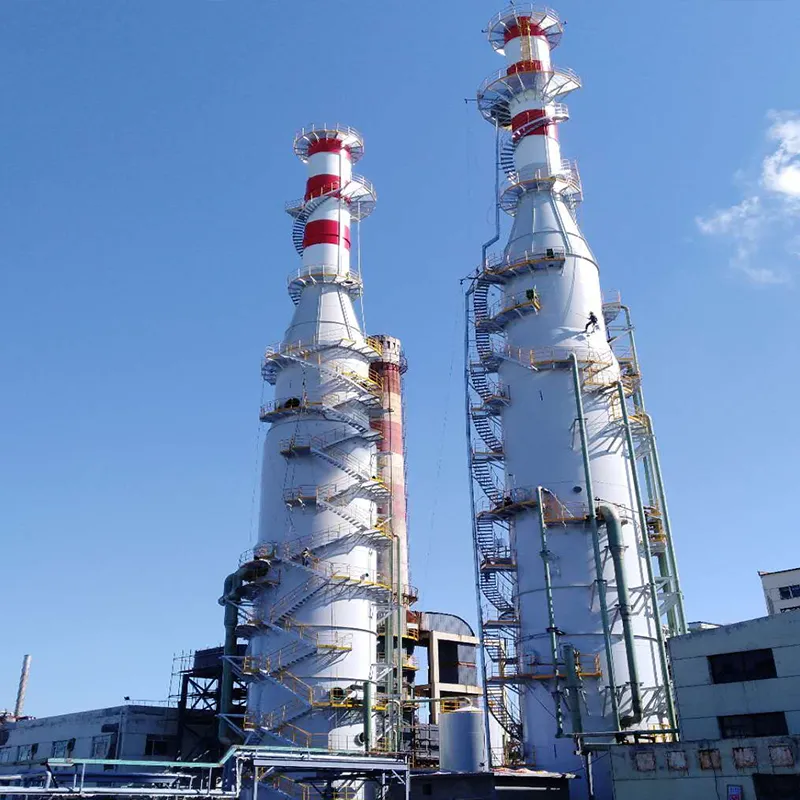
A wet limestone FGD system uses limestone slurry to absorb sulfur dioxide from flue gas. Through absorption, chemical reaction, oxidation, and solid-liquid separation, the sulfur is ultimately recovered mainly in the form of gypsum.
The process is relatively mature, but that does not mean every project can use the same design.
A power plant, steel plant, cement plant, and chemical facility may have very different gas temperatures, dust concentrations, sulfur loads, operating schedules, and available space.
Good FGD engineering starts with these differences.
The Basic Process
The first step is preparing limestone.
Limestone is crushed and milled or supplied in an appropriate powder form before being mixed with water to create a slurry.
The slurry is pumped to the absorber.
Inside the absorber, flue gas passes through a spray zone where limestone slurry is distributed through multiple spray levels.
SO₂ in the flue gas dissolves into the liquid droplets.
It then reacts with calcium-containing compounds.
The sulfur compounds are subsequently oxidized, forming calcium sulfate.
Under appropriate conditions, gypsum crystals develop in the slurry.
The gypsum is then separated and dewatered.
This process allows a gaseous pollutant to be converted into a stable solid product.
Why Gas-Liquid Contact Matters
The absorber is at the center of wet limestone FGD performance.
The system needs to bring a large volume of gas into close contact with the circulating slurry.
Spray nozzle arrangement, droplet size, gas velocity, liquid distribution, and absorber dimensions all affect this contact.
If the slurry distribution is uneven, some portions of the gas may not receive sufficient contact with the absorbent.
If the gas velocity is too high, pressure loss and entrainment may increase.
Therefore, absorber design is an engineering problem involving several competing factors.
Limestone Quality and Grinding
Not all limestone behaves in exactly the same way.
Different limestone sources have different chemical compositions, hardness, purity, and reactivity.
The FGD design therefore needs to account for the actual limestone that will be used.
If the limestone is prepared on site, grinding equipment also becomes part of the overall system.
The required fineness affects reaction performance, while grinding power contributes to operating costs.
For this reason, limestone selection and preparation should be evaluated during the early stages of project design.
Managing Slurry Chemistry
The absorption slurry is not simply water mixed with limestone.
Its chemistry changes continuously as SO₂ is absorbed and calcium compounds react.
The operating pH needs to be controlled within the appropriate range.
If pH becomes too low, SO₂ absorption performance can be affected.
If excessive limestone is added without proper control, reagent utilization may become inefficient.
The system therefore needs instrumentation and automatic control to maintain stable operating conditions.
Oxidation and Gypsum Formation
The sulfur compounds formed during absorption are not immediately gypsum.
The slurry needs an oxidation stage.
Air is introduced into the absorber or a dedicated oxidation zone to convert sulfite species into sulfate.
This process is important because stable gypsum formation depends on effective oxidation.
The quality of the resulting gypsum can be affected by oxidation conditions, solids concentration, crystallization, impurities, and dewatering performance.
Gypsum Dewatering
Once gypsum has been produced, it needs to be separated from the slurry.
Dewatering equipment can reduce the water content and produce a material that is easier to store, transport, or potentially reuse.
Depending on the project, equipment may include hydrocyclones, vacuum belt filters, or other solid-liquid separation technologies.
The appropriate configuration depends on gypsum requirements and overall process design.
Wet Limestone FGD for Power Plants
Power plants typically require high-capacity FGD systems because of their large flue gas volumes.
A wet limestone system can be designed to handle continuous operation and changes in boiler load.
The design should consider:
Maximum and minimum gas flow
SO₂ concentration
Flue gas temperature
Dust loading
Limestone quality
Required emission limit
The system also needs sufficient redundancy for critical equipment where continuous plant operation is important.
Wet Limestone FGD for Steel and Metallurgical Applications
Steel and metallurgical processes can produce flue gases containing SO₂ together with high levels of dust and other components.
These conditions can create additional challenges for wet FGD.
Dust entering the absorber can influence slurry properties and increase equipment wear.
Therefore, upstream dust control and slurry management need to be considered together.
Wet Limestone FGD for Industrial Boilers
Industrial boilers are another important application.
Unlike very large power plants, industrial boiler facilities can have relatively limited installation space.
This makes equipment arrangement particularly important.
Compact designs, appropriate duct routing, pump selection, and maintenance access all need to be considered.
FGD Retrofit: What Makes It Different?
Retrofitting a wet limestone FGD system into an operating industrial facility requires more than selecting an absorber.
Engineers need to understand the existing plant.
For example:
Where can the absorber be installed?
Can the existing fan handle the additional pressure drop?
Is there enough space for limestone preparation?
How will the gypsum be removed?
Can the plant provide sufficient process water?
How will the new control system communicate with the existing plant?
These questions can significantly affect the final design.
A retrofit project may involve modifications to existing ducts, fans, pumps, electrical systems, structural supports, and control systems.
Energy Consumption and Pressure Drop
An FGD system consumes energy.
Major energy users can include:
Slurry circulation pumps
Limestone grinding equipment
Oxidation air blowers
Gypsum dewatering equipment
The absorber and duct system also create pressure loss.
Therefore, an efficient FGD design should not focus solely on SO₂ removal efficiency.
The engineering objective should be to achieve the required environmental performance while keeping energy consumption and operating costs under control.
MirShine's FGD Engineering Experience
MirShine Environmental Group provides industrial desulfurization solutions including limestone-gypsum FGD, ammonia-based FGD, and other flue gas treatment technologies.
The company works with customers across different industrial sectors and evaluates each project according to actual process requirements.
For limestone FGD projects, the engineering scope can cover:
Process design
Absorber design
Slurry circulation
Limestone preparation
Oxidation
Gypsum handling
Ductwork
Control systems
Equipment manufacturing
Project integration
For existing plants, retrofit conditions are incorporated into the design from the beginning.
Selecting the Right Desulfurization Technology
Wet limestone FGD is highly established, but it is not automatically the best solution for every plant.
A proper technology comparison should include:
SO₂ concentration
Flue gas flow
Required removal efficiency
Reagent availability
Reagent price
By-product value
Water availability
Available space
Energy consumption
Existing equipment
For some plants, limestone FGD may provide the best balance.
For others, ammonia FGD or semi-dry/dry processes may be more appropriate.
The best solution is the one that fits the actual project.
Conclusion
Wet limestone FGD remains an important technology for large-scale industrial SO₂ emission control.
Its long operating history, established equipment supply chain, widespread limestone availability, and potential gypsum utilization make it a practical choice for many applications.
At the same time, successful FGD projects require detailed engineering.
Absorber design, slurry chemistry, limestone quality, oxidation, gypsum handling, pressure loss, energy consumption, and retrofit conditions all need to be considered.
MirShine Environmental Group provides customized desulfurization solutions for power plants, steel mills, cement plants, chemical facilities, and other industrial customers.
By combining limestone-gypsum FGD with other environmental technologies, MirShine can also support customers looking for integrated flue gas treatment solutions rather than isolated equipment.
Frequently Asked Questions
What is wet limestone FGD?
Wet limestone FGD is a flue gas desulfurization technology that uses limestone slurry to absorb SO₂ and convert it into calcium sulfate, commonly recovered as gypsum.
What is the main reagent used in wet limestone FGD?
The main reagent is limestone, generally prepared as an aqueous slurry before entering the absorber.
What is the by-product of limestone FGD?
The main solid by-product is gypsum, which can potentially be utilized depending on its quality and local market requirements.
Does wet limestone FGD consume a lot of water?
Wet FGD systems require process water, and water consumption depends on system configuration, flue gas conditions, evaporation, purge requirements, and gypsum handling.
What industries use wet limestone FGD?
Common applications include power generation, steel, metallurgy, cement, chemical processing, and other sulfur-emitting industrial processes.
Can wet limestone FGD remove high concentrations of SO₂?
Wet limestone FGD can be designed for a wide range of SO₂ concentrations. The appropriate configuration depends on inlet gas conditions and the required outlet emission limit.
Can an existing plant be upgraded with limestone FGD?
Yes. Retrofit projects can add or upgrade FGD systems on existing industrial facilities, although site layout, pressure drop, structural conditions, and existing equipment must be carefully evaluated.
What does MirShine provide for limestone FGD projects?
MirShine provides customized engineering and equipment solutions covering process design, absorber systems, slurry circulation, limestone preparation, oxidation, gypsum handling, and integration with existing industrial facilities.
Table of Contents
- A Closer Look at Wet Limestone Desulfurization
- The Basic Process
- Why Gas-Liquid Contact Matters
- Limestone Quality and Grinding
- Managing Slurry Chemistry
- Oxidation and Gypsum Formation
- Gypsum Dewatering
- Wet Limestone FGD for Power Plants
- Wet Limestone FGD for Steel and Metallurgical Applications
- Wet Limestone FGD for Industrial Boilers
- FGD Retrofit: What Makes It Different?
- Energy Consumption and Pressure Drop
- MirShine's FGD Engineering Experience
- Selecting the Right Desulfurization Technology
- Conclusion
-
Frequently Asked Questions
- What is wet limestone FGD?
- What is the main reagent used in wet limestone FGD?
- What is the by-product of limestone FGD?
- Does wet limestone FGD consume a lot of water?
- What industries use wet limestone FGD?
- Can wet limestone FGD remove high concentrations of SO₂?
- Can an existing plant be upgraded with limestone FGD?
- What does MirShine provide for limestone FGD projects?