 EN
EN


At the outset of China’s 15th Five-Year Plan, Xinjiang’s “Blue Sky Protection Campaign” has entered a critical and deeply challenging phase. As the benefits of traditional end-of-pipe treatment technologies begin to plateau, structural issues—such as a heavy industrial base and coal-dominated energy mix—are becoming increasingly prominent. Industrial enterprises in Xinjiang now face unprecedented pressure to upgrade their environmental performance.
Policy signals released in 2026 clearly indicate a fundamental shift from symptomatic treatment to systemic solutions. The key to this transformation lies in whether environmental protection can evolve from a cost burden into a value-generating engine through a “chemical engineering mindset.” Among the available solutions, ammonia-based flue gas desulfurization (FGD) has emerged as a powerful and practical breakthrough technology.
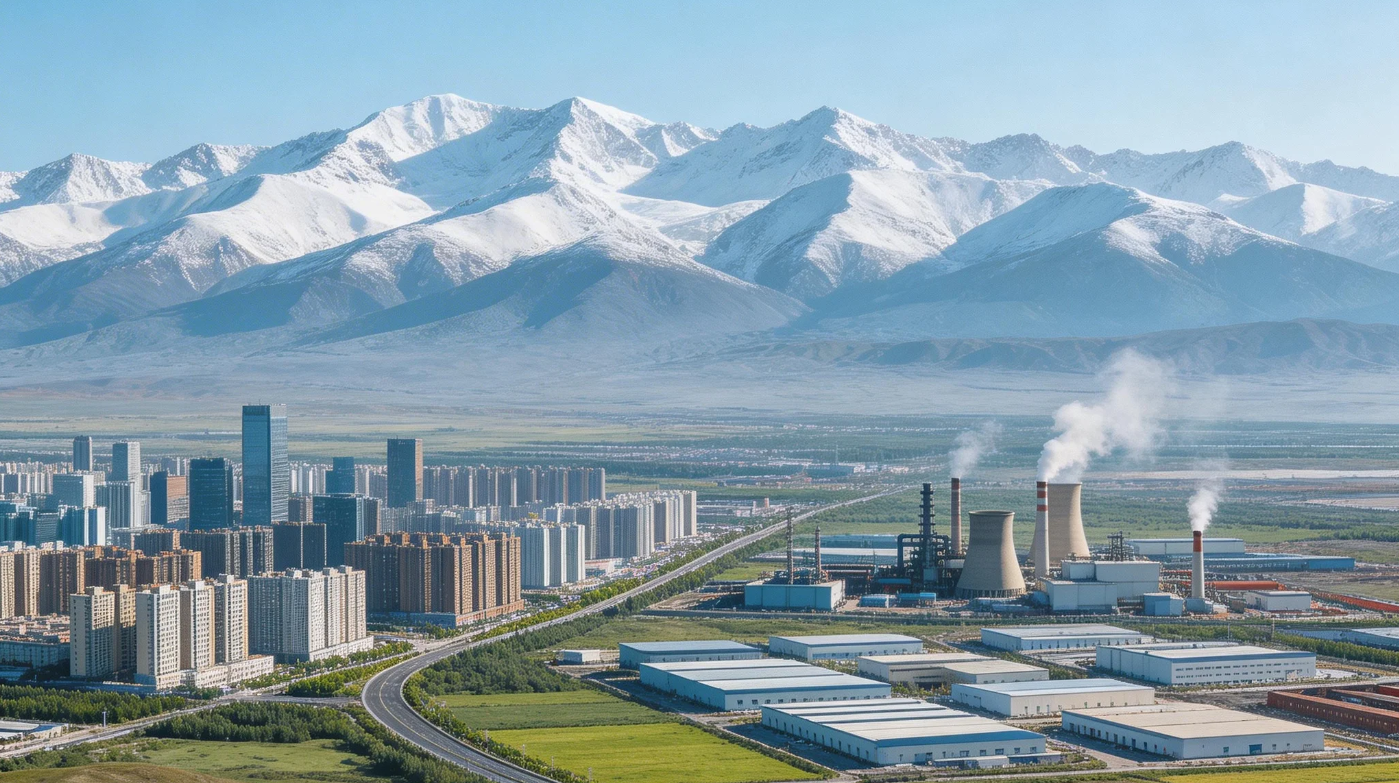
As a major national energy and heavy chemical industrial base, Xinjiang has achieved remarkable progress in air pollution control. During the 14th Five-Year Plan period, ecological and environmental quality improved continuously, earning an “Excellent” rating in national assessments for four consecutive years.
However, behind these achievements lie persistent structural challenges. Pollution in Xinjiang exhibits strong regional concentration and complex characteristics.
The two major urban clusters along the northern slope of the Tianshan Mountains—Urumqi–Changji–Shihezi and Kuitun–Dushanzi–Urumqi—concentrate key industries such as power generation, petrochemicals, and electrolytic aluminum. These clusters are the primary sources of emissions, and unfavorable geographic dispersion conditions further exacerbate pollution control difficulties, making them the toughest regions for air quality management.
In terms of pollution types, PM2.5 pollution in winter and spring overlaps with ozone (O₃) pollution in summer, creating a complex, multi-pollutant control challenge.
Looking ahead to the 15th Five-Year Plan, Xinjiang has set clear targets:
The proportion of “good air quality days” must reach 75.5%
Average PM2.5 concentration must be controlled below 33 μg/m³
Pollutant concentrations in key regions must decrease by 15%–20% compared to 2020 levels
These targets make it clear that traditional, extensive treatment approaches are no longer sufficient. Industrial enterprises must adopt deep, precise, and source-oriented control strategies.
Since 2026, Xinjiang’s environmental policies have sent strong signals of stricter requirements, refined management, and technology-driven solutions.
At the latest regional conference on air pollution control for the northern Tianshan urban clusters, authorities emphasized that industrial emission control must remain the top priority, with the full implementation of “One Enterprise, One Strategy” tailored治理 approaches.
Key policy directions include:
Industrial Structure Optimization: Strict control of new capacity, upgrading existing industries, and fostering green industries
Energy Structure Adjustment: Reducing total coal consumption and improving energy efficiency
Transportation Transformation: Promoting rail transport and green logistics
In addition, the government is strengthening technological support by advancing major projects such as the Integrated Demonstration of Air Pollution Control Technologies in the Northern Tianshan Region, accelerating the conversion of research成果 into practical applications.
This means that conventional end-of-pipe solutions are no longer adequate. Enterprises must adopt advanced technologies capable of high-efficiency desulfurization, coordinated carbon reduction, and resource recycling.
Against this backdrop, MirShine Environmental Technology Co., Ltd. offers a highly aligned solution through its advanced ammonia-based desulfurization technology.
Built on the core concept of “turning pollution into resources,” MirShine has achieved a technological leap through seven generations of innovation—evolving from “pollution control with revenue generation” to “pollution control + carbon reduction + revenue generation.”
The key advantage of MirShine’s technology lies in its flexibility and controllability:
Precise control of temperature and pH enables adaptation to various industrial conditions
Stable and cost-efficient operation under diverse flue gas scenarios
Elimination of common industry issues such as scaling and operational instability
This customizable, adjustable, and long-term stable operation capability perfectly aligns with the “One Enterprise, One Strategy” policy framework.
 A Paradigm Shift: Environmental Protection as a Value Engine
More than just a technological upgrade, this represents a fundamental shift in thinking.
MirShine’s ammonia-based FGD uses ammonia as an absorbent to efficiently convert SO₂ in flue gas into high-purity ammonium sulfate fertilizer. The latest technological advancements have reduced ammonia slip to near zero and even enable the co-production of organic compound fertilizers.
As a result, environmental systems are no longer merely cost centers, but evolve into:
Resource regeneration facilities
Value creation units
This directly supports national strategies for circular economy development and green transformation.
The effectiveness of any advanced technology must be validated in real-world applications.
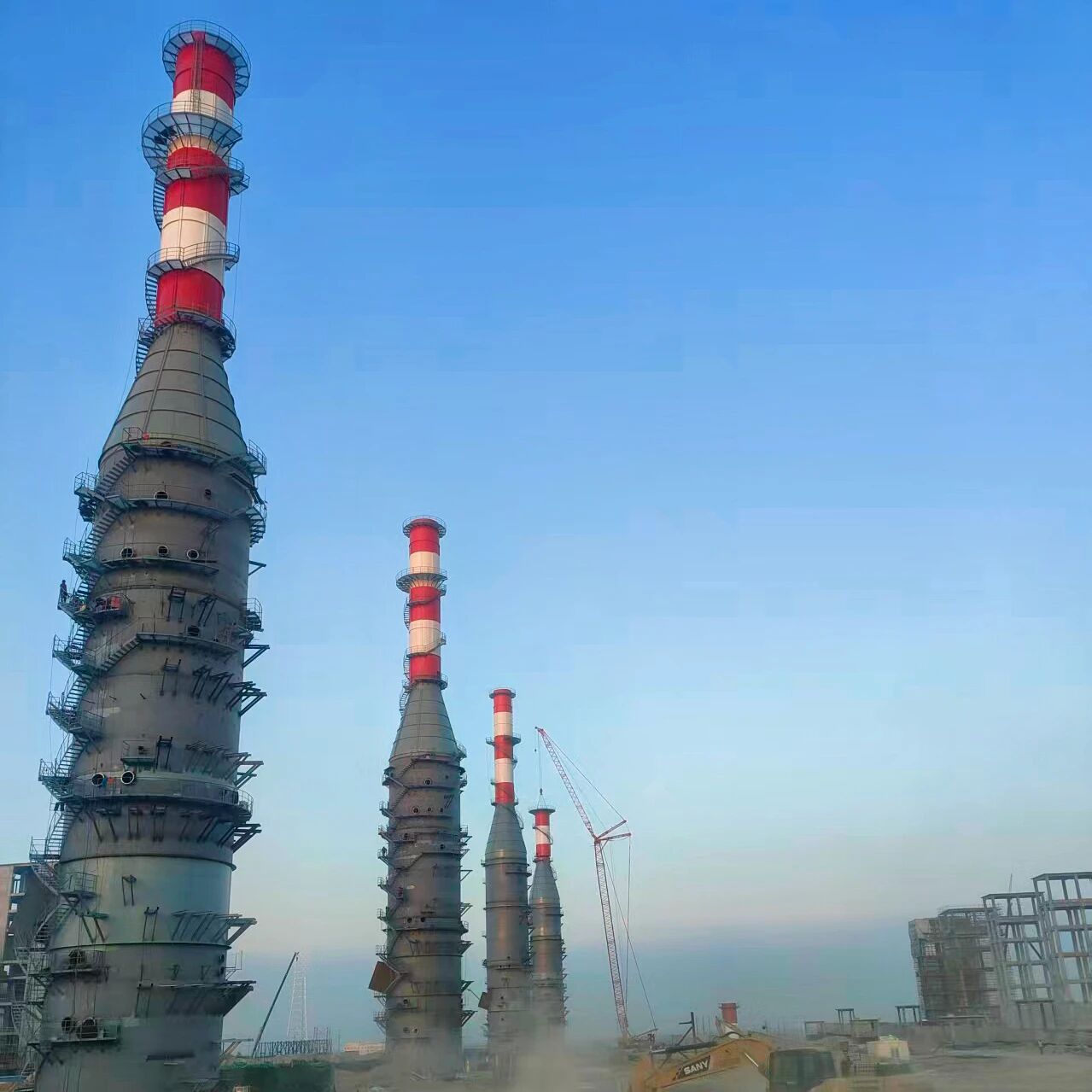
The Xinjiang Huineng project, a key environmental facility supporting a 15 million tons/year coal clean utilization project, faced multiple challenges, including harsh environmental conditions, strict quality requirements, and tight deadlines.
Leveraging its proven “100-Day Project” management system, MirShine completed the lifting of four desulfurization towers in just 70 days, setting a benchmark for both speed and quality in Xinjiang.
The project innovatively integrates:
Four desulfurization systems
One unified post-treatment system
This integrated approach not only achieves efficient SO₂ removal but also converts pollutants into high-purity ammonium sulfate, fully demonstrating the feasibility and reliability of resource-based treatment—even under extreme conditions such as low temperatures and high flue gas concentrations.
 Looking Ahead: A Strategic Choice for the Future
The deep environmental challenges of the 15th Five-Year Plan period represent both pressure and opportunity.
For industrial enterprises in Xinjiang—and across regions facing similar transformation challenges—choosing a technology is essentially choosing a future development pathway.
Solutions like MirShine’s ammonia-based desulfurization, which integrate chemical engineering principles with circular economy concepts, go far beyond simple compliance. They provide a practical pathway to:
Convert environmental pressure into technological advancement
Transform treatment costs into economic returns
This is not only about achieving cleaner air, but also about redefining how traditional heavy industries can evolve under a high-quality development framework—realizing a true win-win between environmental and economic performance.
When chemical thinking meets environmental practice, blue skies and industrial growth are no longer mutually exclusive—they become mutually reinforcing.
Desulfurization & Denitrification
De-dusting
VOCs Treatment
Guillotine Isolation Damper
Decarbonization
Humic Acid Co-production
Waste Tire Pyrolysis
Operation & Maintenance
3Rd. Longshan Environmental Technology Park, Zhangqiu District, JiNan, Shandong, China
Copyright © 2025 MirShine Environmental Protection Technology Co., Ltd. All rights reserved. Privacy Policy