 EN
EN


Recently, the Shandong Provincial Department of Ecology and Environment issued special regulations on the backfilling and reuse of industrial solid wastes, including flue gas desulfurization (FGD) gypsum. According to the new rules, Category I general industrial solid waste—or Category II waste that has been pretreated to meet Category I standards—can be applied for backfilling only after undergoing strict procedural compliance.
These regulations reflect a broader national trend: by 2028, the thresholds for industrial solid waste backfilling are expected to be further tightened, potentially limiting the scale of permissible backfilling. As a result, enterprises are being urged to plan ahead and adopt high-value utilization technologies, such as converting FGD gypsum into gypsum boards or co-producing cement from phosphogypsum. As of August 2025, at least seven provinces have implemented special policies or pilot schemes for industrial solid waste backfilling, covering key industries such as coal, phosphate chemicals, and metallurgy.
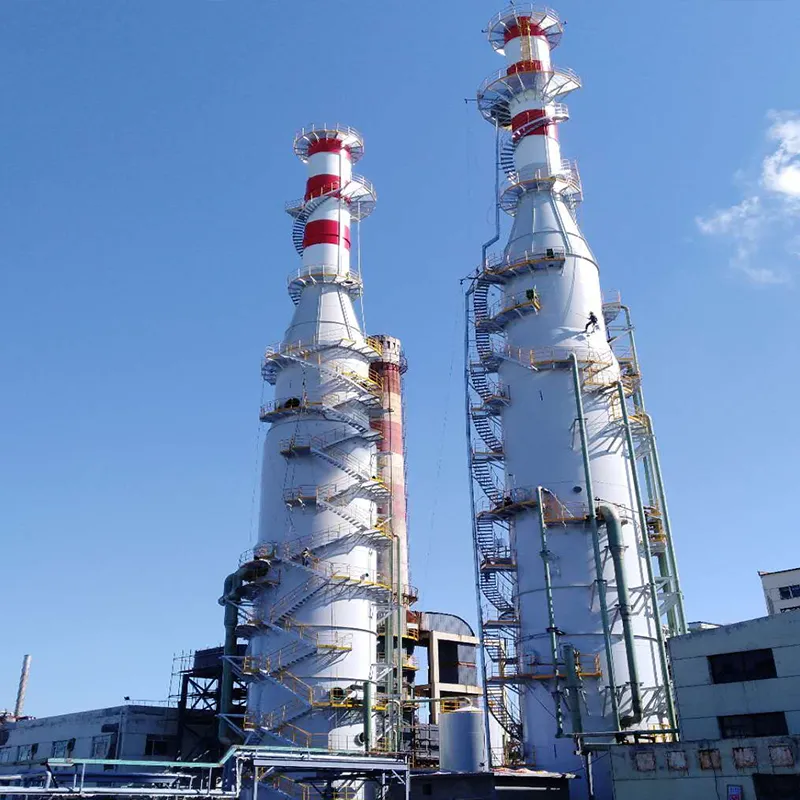
Impact on Flue Gas Desulfurization Practices
In the long term, these policies will likely drive the high-quality development of calcium-based desulfurization and encourage the high-value utilization of its byproducts. At the same time, they place higher technical demands on enterprises, pushing for process upgrades and stricter product quality standards. For example, producing FGD gypsum with consistent composition, low impurity content, and compliance with regulatory standards is now essential. If the gypsum does not meet backfilling requirements, companies may need to invest in pretreatment processes, such as purification and stabilization, or explore alternative resource recovery pathways.
Ammonia-Based Desulfurization Gains Strategic Advantage
While calcium-based desulfurization faces increasing technical pressure, ammonia-based desulfurization technologies benefit from the regulatory shift. The core advantage of ammonia-based FGD lies in its ability to produce valuable byproducts instead of large quantities of waste. Ammonia FGD generates ammonium sulfate, a marketable product that can be directly sold, creating economic value for enterprises and fully aligning with the principles of a circular economy. Unlike calcium-based FGD, ammonia-based systems avoid the environmental and storage risks associated with gypsum stockpiles, effectively reducing waste generation at the source.
“Zero-Waste” and Resource Utilization Advantages
The overarching goal of these new policies is to minimize solid waste generation and promote resource recovery. Ammonia-based desulfurization exemplifies this approach, demonstrating that waste can be transformed into value. By producing a sellable byproduct instead of waste, ammonia FGD not only reduces environmental risk but also supports sustainable industrial operations. This highlights the technology’s alignment with both environmental and economic objectives, positioning ammonia-based desulfurization as an increasingly attractive solution for industries under stricter regulatory frameworks.
Conclusion
The tightening of industrial solid waste management and backfilling regulations is set to reshape the flue gas desulfurization landscape in China. Calcium-based desulfurization faces heightened quality and process demands, while ammonia-based desulfurization gains a competitive edge through its “zero-waste” design and byproduct value. For industries seeking sustainable, compliant, and economically efficient solutions, ammonia-based FGD technologies represent a strategic choice in the evolving regulatory and environmental landscape.
Desulfurization & Denitrification
De-dusting
VOCs Treatment
Guillotine Isolation Damper
Decarbonization
Humic Acid Co-production
Waste Tire Pyrolysis
Operation & Maintenance
3Rd. Longshan Environmental Technology Park, Zhangqiu District, JiNan, Shandong, China
Copyright © 2025 MirShine Environmental Protection Technology Co., Ltd. All rights reserved. Privacy Policy