 EN
EN


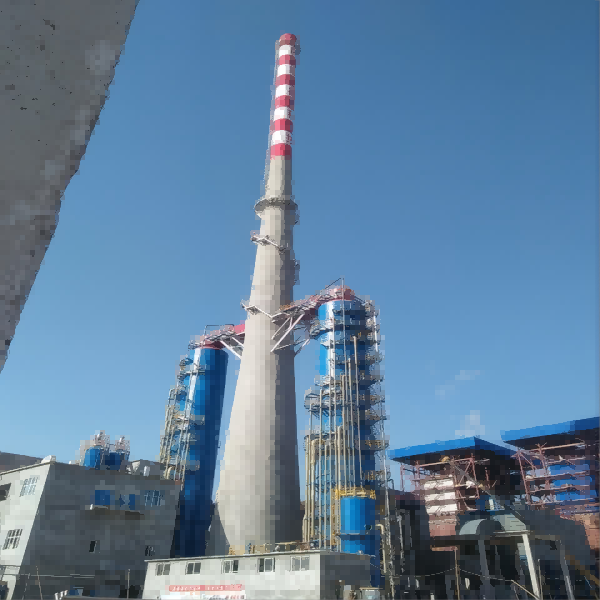
Industrial air pollution regulations continue to evolve worldwide. As governments introduce stricter sulfur dioxide (SO₂) emission limits and industries pursue cleaner production, selecting the right flue gas desulfurization (FGD) technology has become a strategic decision rather than simply an environmental requirement.
For power plants, steel mills, coking facilities, coal chemical complexes, and other heavy industries, choosing the appropriate desulfurization process directly affects capital investment, operating costs, maintenance requirements, environmental compliance, and even long-term profitability.
Among the available technologies, two solutions dominate the industrial market: Limestone-Gypsum Flue Gas Desulfurization (Wet Limestone FGD) and Ammonia-Based Flue Gas Desulfurization (Ammonia FGD).
Although both technologies effectively remove sulfur dioxide from flue gas, they differ significantly in process design, operating principles, environmental performance, by-product utilization, and lifecycle costs.
This article compares the two technologies across multiple dimensions to help industrial decision-makers identify the most suitable solution for their facilities.
Understanding Limestone-Gypsum FGD
Limestone-Gypsum FGD is currently one of the most widely adopted desulfurization technologies worldwide.
The process uses finely ground limestone slurry as the absorbent. Sulfur dioxide reacts with calcium carbonate inside the absorber, producing calcium sulfite, which is further oxidized into gypsum.
The produced gypsum may be sold to cement plants or construction material manufacturers when market demand exists.
Due to its long history of commercial application, limestone FGD is considered a mature and proven technology, particularly for large coal-fired power plants.
However, as environmental regulations become stricter and industrial facilities face increasing pressure to reduce operating costs, several limitations of this technology have become more apparent.
Understanding Ammonia-Based FGD
Ammonia-Based Flue Gas Desulfurization uses ammonia as the absorbent instead of limestone.
Rather than producing gypsum, the system converts sulfur dioxide into ammonium sulfate, a valuable nitrogen-sulfur fertilizer widely used in agriculture.
This fundamental difference changes the economics of desulfurization.
Instead of producing a by-product with fluctuating market demand, ammonia FGD creates a product that generally has stronger commercial value and broader application.
Modern ammonia-based systems also incorporate advanced process optimization to reduce ammonia slip, minimize aerosol formation, and improve overall environmental performance.
SO₂ Removal Efficiency
Both technologies are capable of achieving high sulfur dioxide removal efficiencies.
Modern limestone systems generally achieve removal efficiencies above 95%.
Advanced ammonia-based desulfurization systems can also achieve sulfur removal rates exceeding 95%, with optimized designs reaching more than 99%.
In practical operation, both technologies can satisfy current ultra-low emission requirements when properly designed and operated.
The primary difference lies not in removal efficiency but in operational flexibility and overall system performance.
Space Requirements
Space availability has become one of the most important considerations during retrofit projects.
Many existing industrial facilities were constructed decades ago and have limited room for new environmental equipment.
Limestone FGD systems typically require:
Large absorber towers
Limestone preparation units
Gypsum dewatering equipment
Wastewater treatment facilities
Large storage areas
This results in considerable land occupation and civil construction work.
Ammonia-based systems generally have a much more compact layout.
Because they eliminate several auxiliary systems required by limestone processes, they can significantly reduce installation space and simplify retrofit projects.
For aging industrial facilities, this advantage often translates into lower construction costs and shorter installation periods.
Water Consumption
Water management has become increasingly important in industrial operations.
Conventional wet limestone systems consume substantial quantities of water and generate desulfurization wastewater that requires additional treatment.
Wastewater treatment facilities increase both investment costs and operating complexity.
Modern ammonia-based desulfurization systems are designed to minimize water consumption and can achieve zero desulfurization wastewater discharge under appropriate operating conditions.
This reduces environmental risks while lowering long-term operating expenses.
By-Product Value
One of the biggest differences between the two technologies is by-product utilization.
Limestone FGD produces gypsum.
Although gypsum has commercial applications, market demand varies considerably depending on regional construction industries.
Some facilities experience difficulties selling gypsum, leading to storage and disposal challenges.
Ammonia-based desulfurization produces ammonium sulfate.
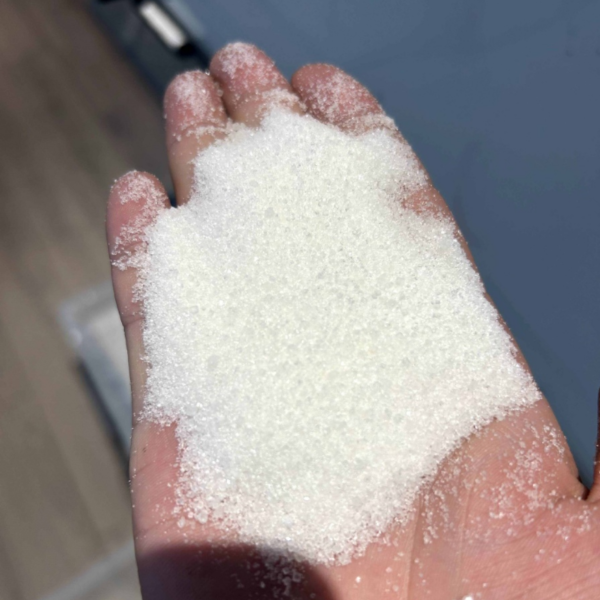
Ammonium sulfate is widely used as a nitrogen and sulfur fertilizer in agriculture.
Its relatively stable demand allows many operators to generate additional revenue through by-product sales.
For facilities with access to fertilizer markets, this creates a significant economic advantage.
Operating Costs
Lifecycle operating costs should always be evaluated rather than focusing solely on initial investment.
Limestone systems require continuous limestone procurement, wastewater treatment, gypsum handling, slurry circulation, and higher maintenance requirements.
Ammonia-based systems eliminate many of these additional processes.
Although ammonia prices vary by region, facilities with access to industrial ammonia or by-product ammonia often achieve highly competitive operating costs.
When by-product revenue is included, overall project economics may become even more favorable.
Environmental Performance
Environmental regulations increasingly address pollutants beyond sulfur dioxide.
Issues such as ammonia slip, condensable particulate matter (CPM), wastewater discharge, and resource utilization are becoming important evaluation indicators.
Modern ammonia-based desulfurization technology has evolved significantly.
Advanced staged purification designs effectively control ammonia slip while minimizing aerosol formation.
Systems developed by MirShine also integrate proprietary technologies that help maintain ammonia emissions well below regulatory limits while achieving excellent CPM control.
These capabilities support long-term compliance under increasingly stringent environmental standards.
Industries Best Suited for Limestone FGD
Limestone-Gypsum FGD remains an excellent solution for many applications, particularly:
Large coal-fired power stations
Facilities with abundant limestone resources
Projects with sufficient installation space
Regions where gypsum utilization markets are well established
Industries seeking conventional mature technology
Industries Best Suited for Ammonia-Based FGD
Ammonia-based desulfurization is particularly suitable for:
Coal chemical plants
Steel plants
Coking facilities
Industrial boilers
Power plants with space limitations
Facilities pursuing zero wastewater discharge
Projects emphasizing circular economy principles
Plants with existing ammonia resources
Industries seeking by-product recovery
Which Technology Should You Choose?
There is no universal answer.
Every industrial facility has different operating conditions, fuel characteristics, environmental targets, and economic considerations.
When evaluating an FGD system, plant owners should consider:
Available installation space
Water availability
Future environmental regulations
Wastewater treatment requirements
Operating costs
Maintenance resources
Potential by-product markets
Expected project lifetime
A comprehensive technical and economic evaluation will usually identify the most suitable solution.
Why More Industrial Facilities Are Considering Ammonia-Based FGD
Over the past decade, industrial priorities have shifted.
Environmental technologies are no longer expected merely to satisfy emission regulations.
Companies increasingly seek solutions that combine environmental performance with operational efficiency and resource recovery.
Ammonia-based desulfurization aligns well with these objectives.
By simultaneously reducing sulfur dioxide emissions, minimizing wastewater, recovering valuable ammonium sulfate, and supporting circular economy initiatives, the technology offers long-term value beyond regulatory compliance.
As global sustainability goals continue to evolve, ammonia FGD is expected to play an increasingly important role in industrial emission control.
Conclusion
Choosing the right flue gas desulfurization technology requires balancing environmental performance, investment costs, operating efficiency, and long-term sustainability.
Limestone-Gypsum FGD remains a reliable and mature technology suitable for many large-scale installations.
However, for facilities seeking compact system design, wastewater reduction, resource recovery, and improved economic performance, ammonia-based desulfurization offers compelling advantages.
Rather than viewing environmental protection as a cost, modern ammonia FGD enables industries to transform sulfur dioxide control into an opportunity for sustainable growth and value creation.
Frequently Asked Questions
What is the difference between Ammonia FGD and Limestone FGD?
The main difference lies in the absorbent and the by-product. Limestone FGD uses limestone to produce gypsum, while Ammonia FGD uses ammonia to produce ammonium sulfate fertilizer.
Which FGD technology has lower operating costs?
The answer depends on local reagent prices, wastewater treatment requirements, and by-product utilization. In many applications, ammonia-based FGD offers lower lifecycle costs due to resource recovery and simplified system operation.
Is ammonia-based desulfurization suitable for retrofit projects?
Yes. Its compact layout and reduced auxiliary equipment make it particularly suitable for upgrading existing industrial facilities with limited installation space.
Does ammonia-based FGD produce wastewater?
Modern ammonia-based systems can be designed to operate without generating desulfurization wastewater, reducing environmental management requirements.
Which industries benefit most from ammonia-based desulfurization?
Power plants, steel mills, coking facilities, coal chemical plants, industrial boilers, and other industries with sulfur dioxide emissions can benefit, especially where ammonia resources are available.
Can ammonium sulfate be sold?
Yes. Ammonium sulfate is a widely used agricultural fertilizer and can provide an additional revenue stream for plant operators.
How can I determine which FGD technology is best for my plant?
The best solution depends on your fuel type, flue gas composition, plant layout, environmental targets, water availability, and operating budget. A detailed technical assessment is recommended before selecting an FGD system.
Table of Contents
- Understanding Limestone-Gypsum FGD
- Understanding Ammonia-Based FGD
- SO₂ Removal Efficiency
- Space Requirements
- Water Consumption
- By-Product Value
- Operating Costs
- Environmental Performance
- Industries Best Suited for Limestone FGD
- Industries Best Suited for Ammonia-Based FGD
- Which Technology Should You Choose?
- Why More Industrial Facilities Are Considering Ammonia-Based FGD
- Conclusion
-
Frequently Asked Questions
- What is the difference between Ammonia FGD and Limestone FGD?
- Which FGD technology has lower operating costs?
- Is ammonia-based desulfurization suitable for retrofit projects?
- Does ammonia-based FGD produce wastewater?
- Which industries benefit most from ammonia-based desulfurization?
- Can ammonium sulfate be sold?
- How can I determine which FGD technology is best for my plant?