 EN
EN


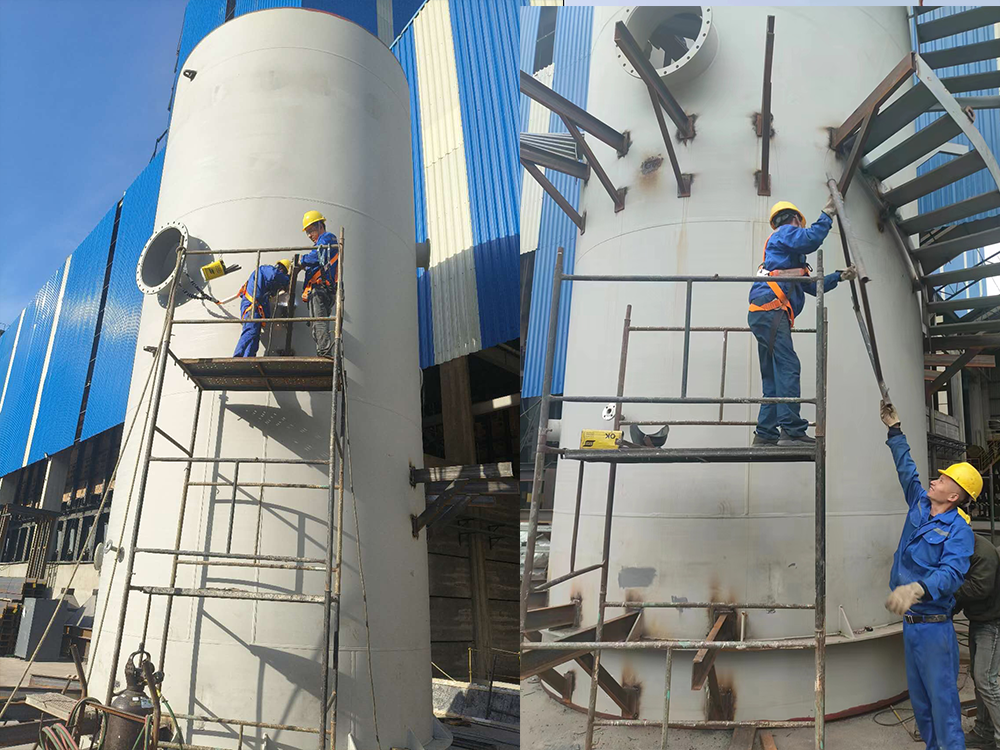
For decades, flue gas desulfurization has been viewed primarily as an environmental compliance requirement. Industrial enterprises invested heavily in emission control systems to meet regulations, often considering these investments as unavoidable operating expenses. However, as industries seek ways to improve sustainability while maintaining profitability, a new perspective is emerging: environmental protection can also generate economic value.
Among all flue gas desulfurization technologies currently available, ammonia-based desulfurization stands out for its unique ability to convert sulfur dioxide emissions into a commercially valuable product. Instead of producing waste materials that require disposal, ammonia FGD transforms pollutants into ammonium sulfate fertilizer, creating a practical example of resource recovery and circular economy principles.
This capability is one of the key reasons why ammonia-based desulfurization is attracting growing attention from power plants, steel mills, coking facilities, and chemical enterprises around the world.
The Traditional Cost Burden of Flue Gas Desulfurization
Most conventional desulfurization technologies focus solely on removing sulfur dioxide from exhaust gases.
While effective at reducing emissions, these systems often create additional operational challenges.
For example, limestone-gypsum desulfurization requires significant reagent consumption, complex wastewater treatment systems, and large quantities of gypsum byproducts. Although gypsum can sometimes be utilized, market demand is often inconsistent, resulting in storage and disposal challenges.
Dry desulfurization technologies can simplify operation, but their byproducts generally have limited commercial value.
As a result, many industrial operators view desulfurization systems as cost centers that consume resources without generating direct economic returns.
The situation changes significantly when ammonia-based desulfurization is introduced.
How Ammonia-Based Desulfurization Works
Ammonia-based desulfurization uses ammonia as the absorbent to capture sulfur dioxide from industrial flue gas.
During the process, sulfur dioxide reacts with ammonia and oxygen under controlled conditions, producing ammonium sulfate.
The chemical reaction transforms a regulated pollutant into a valuable agricultural product.
Unlike many conventional environmental technologies that focus only on waste reduction, ammonia FGD emphasizes both pollution control and resource utilization.
This dual benefit aligns closely with modern sustainability strategies that prioritize efficiency, circular economy practices, and environmental responsibility.
Understanding the Value of Ammonium Sulfate
Ammonium sulfate is a widely used fertilizer containing both nitrogen and sulfur, two essential nutrients required for crop growth.
Global demand for ammonium sulfate remains strong due to several factors:
Increasing agricultural productivity requirements
Growing demand for sulfur-containing fertilizers
Expansion of commercial farming operations
Nutrient deficiencies in agricultural soils
Compatibility with a wide range of crops
Farmers commonly use ammonium sulfate for crops such as corn, wheat, rice, vegetables, cotton, and fruit plantations.
Because sulfur deficiency is becoming more common in agricultural soils, the demand for sulfur-enriched fertilizers continues to increase.
This creates a stable market for ammonium sulfate generated through ammonia desulfurization systems.
Transforming Environmental Investment into Revenue
One of the most attractive features of ammonia-based desulfurization is its ability to generate financial returns through byproduct recovery.
In a traditional environmental protection model, enterprises spend money on equipment, chemicals, maintenance, wastewater treatment, and waste disposal.
In contrast, ammonia FGD allows companies to recover value from sulfur dioxide emissions.
The recovered ammonium sulfate can be:
Sold directly to fertilizer distributors
Supplied to agricultural cooperatives
Used internally if fertilizer production is part of the business
Integrated into local agricultural supply chains
This additional revenue stream can significantly improve the economics of environmental compliance projects.
In many cases, byproduct sales help offset operating expenses, reducing the overall cost of sulfur dioxide control.
Why This Matters for Industrial Operators
Environmental regulations continue to become stricter around the world.
At the same time, energy prices, labor costs, and raw material expenses are increasing.
Industrial enterprises are under pressure to improve both environmental and financial performance.
Ammonia-based desulfurization helps address both objectives simultaneously.
By reducing sulfur dioxide emissions and generating valuable fertilizer products, companies can improve their environmental profile while strengthening operational economics.
This combination is particularly attractive for industries operating under competitive market conditions.
Advantages for Coking and Chemical Industries
The economic benefits of ammonia FGD become even more significant in industries that already have access to ammonia resources.
Coking plants often generate byproduct ammonia during production processes.
Chemical facilities may already handle ammonia as part of their operations.
In these situations, ammonia can often be integrated into the desulfurization process more efficiently, reducing reagent procurement costs.
The result is a highly cost-effective emission control solution capable of delivering both environmental and economic benefits.
Reducing Wastewater Treatment Costs
Another important source of economic value comes from wastewater elimination.
Traditional wet desulfurization systems frequently generate wastewater requiring additional treatment before discharge.
Wastewater treatment infrastructure increases:
Capital investment
Energy consumption
Chemical consumption
Maintenance requirements
Operational complexity
Modern ammonia desulfurization systems can achieve wastewater-free operation, eliminating these costs and simplifying plant management.
This contributes directly to lower lifecycle operating expenses.
Lower Footprint Means Lower Capital Costs
Space is often one of the most expensive resources in industrial facilities.
Conventional desulfurization systems may require extensive land occupation and significant civil construction work.
Ammonia FGD systems generally feature more compact designs.
Benefits include:
Reduced foundation requirements
Lower construction costs
Faster installation schedules
Simplified retrofit implementation
Reduced project downtime
These factors improve overall project economics, particularly for aging facilities where space is limited.
Supporting Circular Economy Goals
Governments and industries worldwide are increasingly embracing circular economy principles.
The objective is simple: maximize resource utilization while minimizing waste generation.
Ammonia-based desulfurization fits perfectly within this framework.
Instead of treating sulfur dioxide as waste, the process converts it into a useful product that supports agricultural production.
This creates a sustainable cycle in which industrial emissions contribute to resource generation rather than environmental burden.
Such approaches are becoming increasingly valuable as sustainability performance gains importance among investors, regulators, and customers.
The Role of Advanced Technology
Historically, concerns about ammonia slip and aerosol formation limited the adoption of ammonia FGD systems.
However, technological advancements have significantly improved performance.
Modern systems incorporate:
Advanced absorption structures
Multi-stage purification technologies
Efficient aerosol control systems
Optimized process automation
Improved ammonia utilization efficiency
MirShine’s staged separation and purification ammonia desulfurization technology effectively addresses traditional challenges while maintaining high sulfur removal efficiency and stable operation.
This allows industrial operators to maximize both environmental and economic benefits.
Future Market Potential
As global sustainability initiatives continue to expand, demand for environmentally responsible industrial solutions will continue to grow.
Technologies that create economic value while improving environmental performance are likely to gain increasing market acceptance.
Ammonia-based desulfurization represents one of the clearest examples of this trend.
Its ability to transform pollution into profit positions it as a long-term solution for industries seeking sustainable growth.
For companies evaluating future environmental investments, ammonia FGD offers an opportunity to move beyond compliance and embrace resource recovery as part of a broader business strategy.
Conclusion
Environmental protection and profitability no longer need to be opposing objectives.
Ammonia-based desulfurization demonstrates how innovative technologies can simultaneously reduce emissions, eliminate wastewater, recover valuable resources, and generate economic returns.
By converting sulfur dioxide into marketable ammonium sulfate fertilizer, industrial enterprises can transform a traditional environmental expense into a sustainable source of value.
As industries continue pursuing cleaner production and greater operational efficiency, ammonia FGD is expected to play an increasingly important role in the future of industrial emission control.
FAQ
What is ammonium sulfate?
Ammonium sulfate is a nitrogen-sulfur fertilizer widely used in agriculture to improve crop growth and soil nutrient balance.
How is ammonium sulfate produced in ammonia desulfurization?
Sulfur dioxide captured from flue gas reacts with ammonia and oxygen to form ammonium sulfate during the desulfurization process.
Can ammonium sulfate be sold commercially?
Yes. Ammonium sulfate is a valuable fertilizer with strong global demand and can generate additional revenue for plant operators.
Does ammonia-based desulfurization reduce operating costs?
Yes. The technology can reduce wastewater treatment costs, lower maintenance requirements, and create income through byproduct sales.
Which industries benefit most from ammonia FGD?
Power plants, steel mills, coking facilities, chemical plants, and industries with existing ammonia resources often achieve the greatest economic benefits.
Is ammonia-based desulfurization environmentally friendly?
Yes. It achieves high sulfur dioxide removal efficiency while supporting resource recovery, wastewater reduction, and circular economy objectives.