 EN
EN


On the shores of the East China Sea in Putian, Fujian, a modernized caprolactam production base is quietly writing a new chapter in industrial environmental management. Here, there is no pungent odor, no billowing smoke; only the crisp air mingling with the sound of waves—a testament to the harmonious coexistence of industrial civilization and the natural environment.
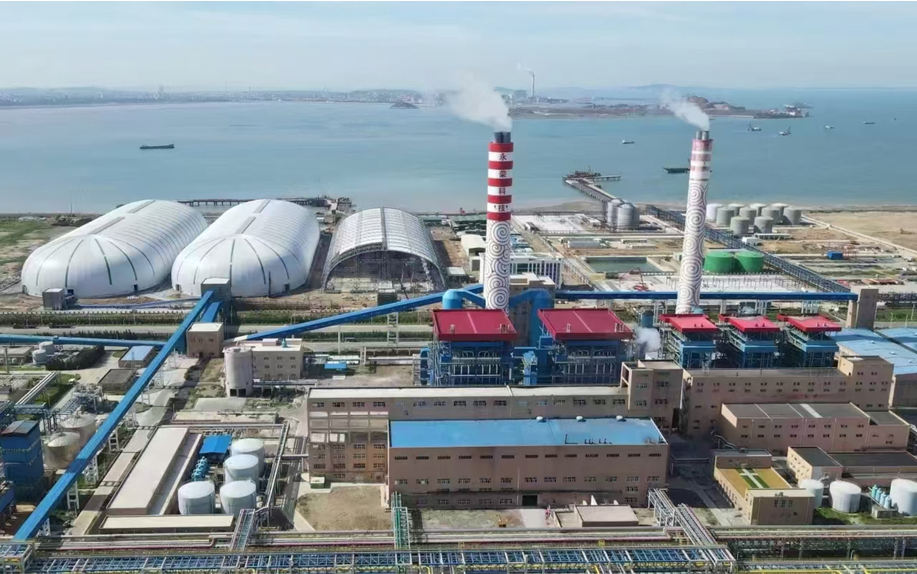
At the heart of this vision of industrial-nature harmony lies the desulfurization system, the key element ensuring the purity of this ecosystem. In January 2023, the system, supporting two 910 t/h high-temperature, high-pressure boilers, began operations. During in-depth monitoring conducted in May 2025, the system delivered an impressive performance record: the average ammonia slip measured just 1.15 mg/m³, with the maximum remaining below 56% of the national standard limit. Remarkably, all monitored data remained fully compliant throughout the period, with stable distributions that demonstrated the precision and reliability of the process control.
If low ammonia slip is considered fundamental, the breakthrough in condensable particulate matter (CPM) control represents a creative leap forward in the industry. Monitoring results show CPM concentrations as low as 0.104 mg/m³, significantly below typical industry levels. This achievement stems from the advanced clean ammonia-based desulfurization technology combined with an intelligent ammonia injection adjustment system. By automatically fine-tuning process parameters based on real-time monitoring, the system not only ensures stable operation but also achieves a qualitative leap from compliance-level emissions to near-zero emissions, completely resolving the long-standing industry challenge of “smoke trailing”. This makes the environmental performance verifiable both through data and visual observation.
Walking through the facility, one hears the low hum of smoothly operating equipment and sees orderly arrays of piping and towers—a reflection of the full-chain governance approach adopted in the project. From source reduction to process optimization to end-of-pipe capture, every step is meticulously designed. A technician points to the control screen curves:
“These data don’t just relate to emission compliance—they reflect our responsibility to this blue sky and clean sea.”
The monitoring team applies dual verification methods, using both manual absorption and Fourier-transform infrared (FTIR) techniques to ensure every data point is accurate. These numbers reflect not only regulatory compliance but also MirShine’s commitment to environmental stewardship.
The success of the Fujian Yongrong project proves that green industrial development is both feasible and imperative. It provides not only a replicable technical model but also a firm development philosophy: environmental protection is not a cost burden but a driver of high-quality growth. Here, the day-to-day stable operation and rigorous adherence to every process parameter are the most vivid, profound embodiments of the principle “Green mountains and clear waters are as valuable as gold and silver.”
This green achievement from the East China Sea shines as a guiding light for the industry, demonstrating that sustainable industrial development and environmental stewardship can progress hand in hand.
Desulfurization & Denitrification
De-dusting
VOCs Treatment
Guillotine Isolation Damper
Decarbonization
Humic Acid Co-production
Waste Tire Pyrolysis
Operation & Maintenance
3Rd. Longshan Environmental Technology Park, Zhangqiu District, JiNan, Shandong, China
Copyright © 2025 MirShine Environmental Protection Technology Co., Ltd. All rights reserved. Privacy Policy